Algorithmic Fairness Checks in Automated Random Draws for Multi-Platform Prize Events
Carlo Peters · May 29, 2026

Algorithmic Fairness Checks in Automated Random Draws for Multi-Platform Prize Events
Automated random draws now power prize events that span websites, mobile apps, social media channels, and email campaigns at the same time, and operators run algorithmic fairness checks to verify that selection processes treat every entry equally regardless of platform origin. These checks examine random number generators for statistical uniformity, scan for unintended correlations between entry sources and selection outcomes, and apply bias-detection routines before results become public.
Researchers at several institutions have documented how platform-specific data formats can introduce subtle weighting effects if left unexamined, which is why multi-platform systems incorporate cross-channel normalization layers before the draw executes. Data from the Federal Trade Commission shows that consumer protection guidelines increasingly reference the need for transparent selection mechanics when promotions cross digital boundaries.
Core Components of Fairness Verification
Teams begin by testing the underlying random number generator against established statistical suites such as DIEHARD and NIST SP 800-22, then they layer on platform-specific audits that compare entry metadata across web forms, in-app submissions, and social media clicks. Observers note that these audits flag discrepancies in timestamp distributions or device identifiers that might otherwise skew probability calculations.
Next comes a demographic parity test that measures whether selection rates remain consistent when entries are grouped by inferred geography or device type, although the test itself avoids using protected attributes directly. Systems store hashed identifiers rather than raw personal data so that reviewers can rerun checks without exposing participant information.
Handling Multi-Platform Entry Streams
Entries arrive through APIs that differ in payload structure and latency, therefore fairness pipelines first standardize fields such as entry time, source tag, and verification status before feeding them into the selection engine. One documented approach merges streams into a single chronological ledger, applies deduplication rules, and then executes the draw while logging every transformation step for later audit.
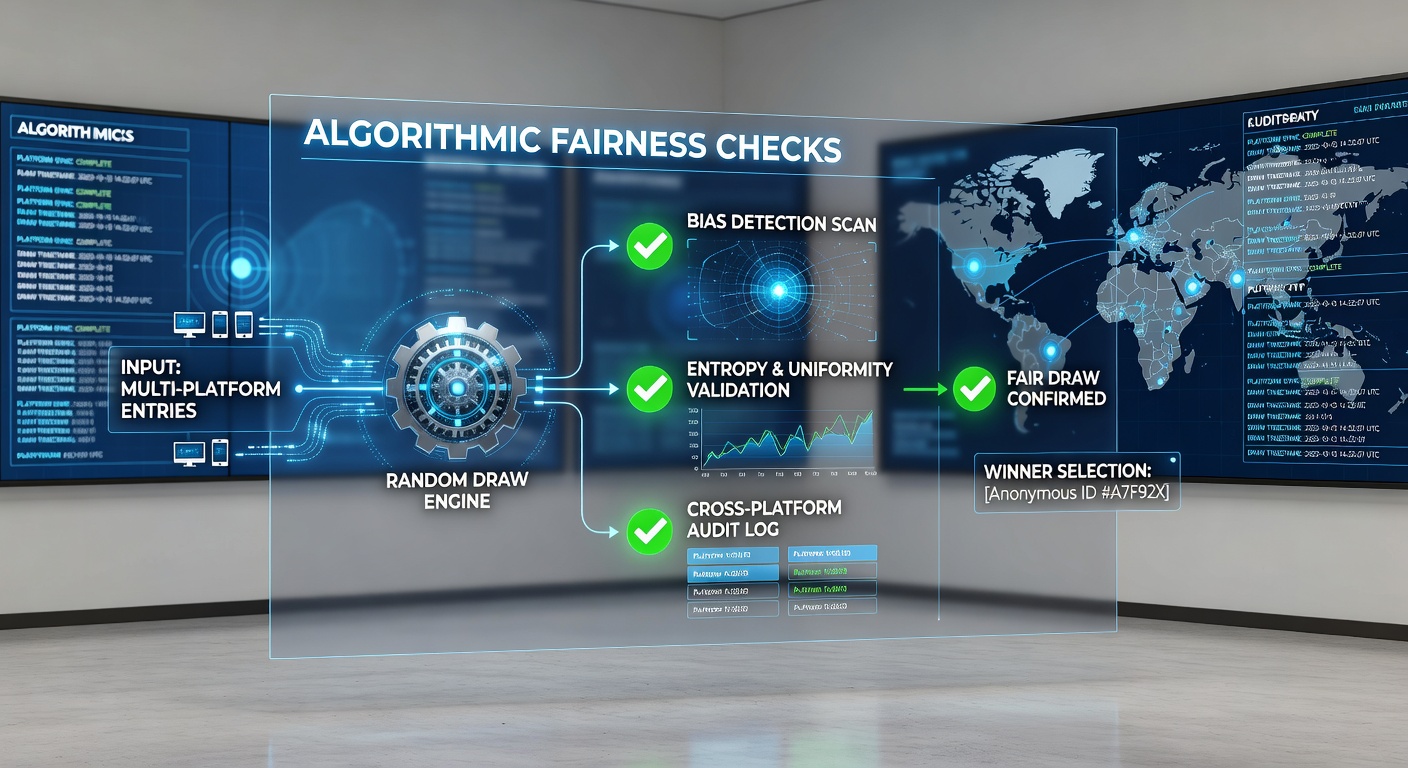
Canadian regulatory guidance from the Competition Bureau highlights the importance of maintaining auditable logs when promotions operate across provincial and territorial boundaries, and similar expectations appear in Australian consumer law updates effective through spring 2026. Operators therefore embed version-controlled scripts that record both the random seed and the platform-weighting coefficients applied at draw time.
Regulatory and Technical Standards Emerging in 2026
By May 2026 several jurisdictions had aligned their digital promotion rules around common statistical thresholds for fairness testing, including minimum sample sizes for parity checks and mandatory third-party certification for generators used in draws exceeding certain prize values. These alignments reduce the need for separate compliance runs when the same event runs simultaneously in North America and the Asia-Pacific region.
Industry groups such as the Interactive Advertising Bureau have published reference architectures that separate the draw execution module from the fairness monitoring module, allowing independent verification without halting ongoing campaigns. The separation also supports rapid updates when new bias-detection methods become available.
Practical Implementation Examples
One North American operator integrated a real-time dashboard that displays running statistics on entry volume per platform alongside selection probability curves refreshed after every batch of new submissions. Reviewers receive automated alerts when any curve deviates beyond two standard deviations from the expected uniform line.
Another case involved a European campaign that processed entries from five distinct mobile game titles plus a web portal, and the fairness layer applied platform-specific entropy adjustments derived from historical participation patterns rather than static weights. Post-draw reports confirmed that selection proportions matched entry proportions within 0.3 percent across all channels.
Conclusion
Algorithmic fairness checks have become a standard layer in multi-platform prize events because they provide measurable evidence that random draws operate without systematic advantage tied to entry source. Continued refinement of statistical tests, combined with clearer regulatory alignment across regions, supports consistent application as campaigns grow in scale and technical complexity.