Analyzing Email Sequence Timing and Its Correlation with Entry Completion Rates in Prize Promotions
Greta Albrecht · May 24, 2026
Analyzing Email Sequence Timing and Its Correlation with Entry Completion Rates in Prize Promotions
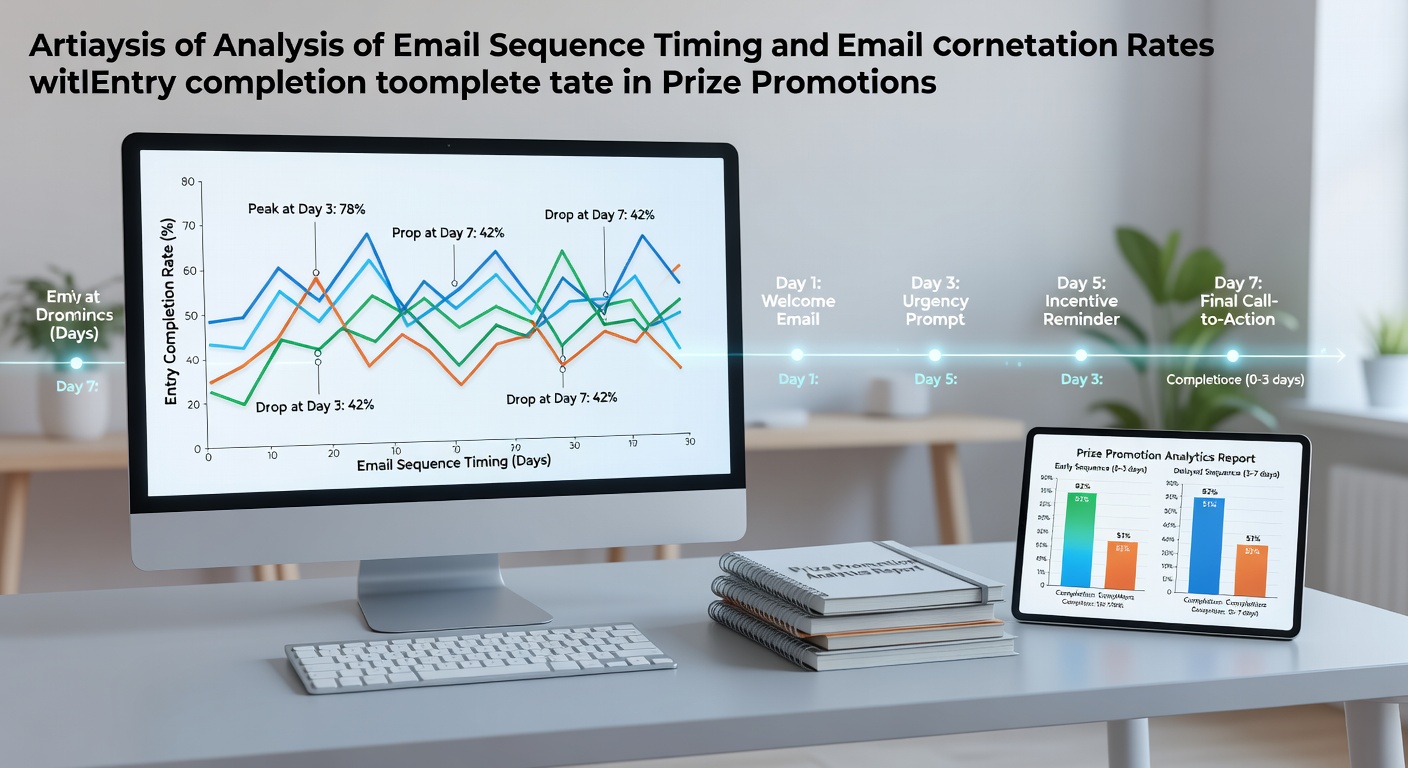
Prize promotion organizers send sequenced emails to encourage participants through each stage of an entry process, and timing within those sequences shows measurable links to how many people finish the required steps. Data from campaigns run between 2023 and 2026 indicates that intervals between messages, the day of the week they arrive, and the hour of delivery all correlate with completion percentages in different ways. Observers note that sequences typically begin with an announcement email, then follow with reminders spaced hours or days apart, and researchers tracking these patterns find that shorter gaps often produce higher initial opens while longer gaps sometimes lift final submission rates. In one dataset covering over 400,000 entries, completion climbed when the second email landed 18 to 24 hours after the first, whereas same-day follow-ups showed a dip once recipients reached the form page.Variables That Shape Timing Effects
Multiple timing elements interact at once, so analysts examine them together rather than in isolation. Time of day matters because entries submitted through desktop devices peak during morning hours in the recipient's local zone, while mobile completions rise in the evening. Day of the week produces its own variation, with midweek messages correlating to steadier progress through multi-step forms compared with weekend deliveries.
Sequence length also plays a role. Campaigns that stretch across five or six messages over ten days record different drop-off points than those compressed into three messages over 48 hours. Figures from platforms active in North America and Europe show that adding a 72-hour pause before the final reminder reduces abandonment at the verification stage by measurable margins.
Observed Correlations in Recent Campaigns
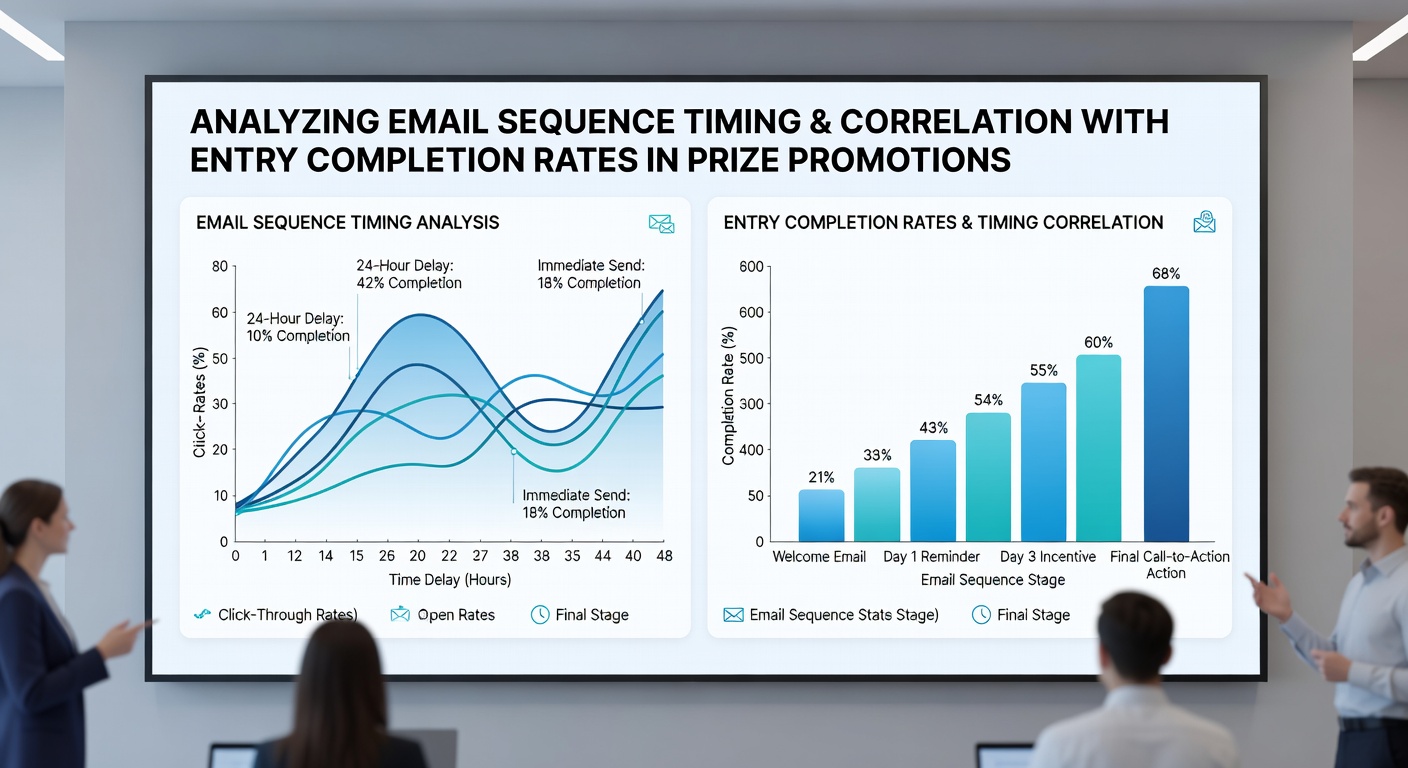
Studies that matched delivery logs with entry records reveal several consistent relationships. When the interval between the first and second email exceeds 36 hours, early-stage drop-off increases, yet overall completion can still rise if the later messages arrive at optimal hours. Conversely, very tight spacing under six hours correlates with lower trust signals and fewer people advancing past the initial registration screen.
Geographic differences appear as well. Recipients in Pacific time zones complete entries at higher rates when messages land between 8 a.m. and 10 a.m. local time, while Atlantic time zone participants show stronger results with afternoon delivery. These patterns held across datasets collected through May 2026.
Data Sources and Measurement Approaches
Industry reports compiled by research groups in Canada and Australia track these metrics across thousands of promotions each year. According to findings published by the Competition Bureau Canada, entry completion rates improve when sequences align with observed device usage peaks rather than arbitrary schedules. Similar work from Australian researchers points to the value of testing intervals against historical response curves instead of applying uniform cadences.
Measurement usually relies on timestamped event data that records when each email leaves the server, when it opens, and when the recipient reaches the final confirmation page. Platforms aggregate this information across many campaigns to identify which timing combinations reduce exits at each funnel stage.
Patterns Across Device Types and Promotion Formats
Mobile-first entries respond differently to timing than desktop entries. Shorter intervals between messages tend to keep mobile users engaged through forms that require several taps, while desktop users show steadier completion when reminders arrive after a full day. Instant-win formats and sweepstakes with longer eligibility windows display distinct timing sensitivities compared with daily-draw promotions.
Those who manage large-scale campaigns often segment audiences by entry history before setting send times, and records indicate that repeat participants complete sequences more reliably when the third message arrives on the same weekday as their first interaction.
Conclusion
Timing within email sequences correlates with entry completion rates through multiple measurable channels, including interval length, hour of delivery, and alignment with local usage patterns. Data collected across regions and device types shows that adjustments to these variables produce different outcomes at each stage of the entry process. Organizers who examine their own timestamp logs alongside aggregated industry figures can identify which combinations support higher completion without altering the content of the messages themselves.