Entry Timing's Role in Unlocking Higher Success in Digital Entertainment Contests
Eden Hayes · May 20, 2026

Entry Timing's Role in Unlocking Higher Success in Digital Entertainment Contests
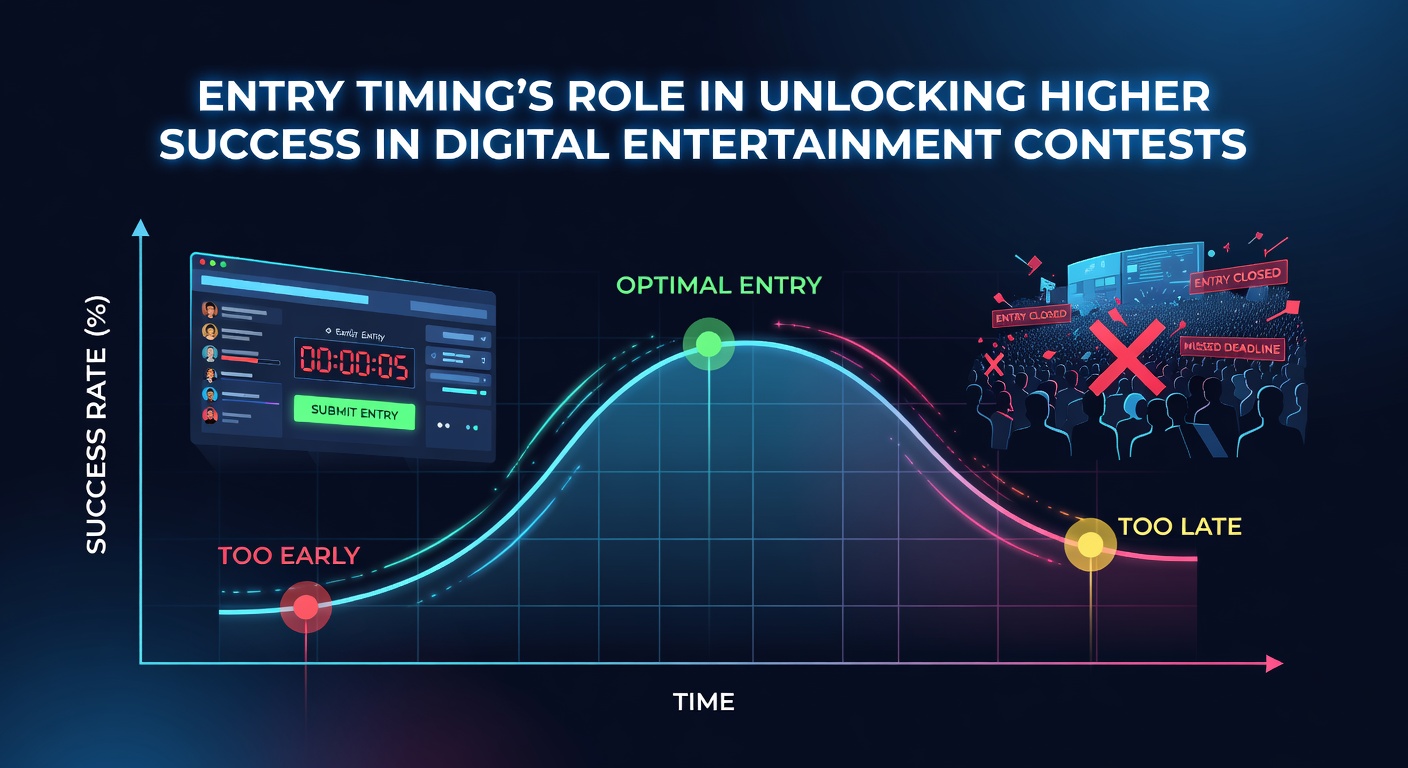
Digital entertainment contests have grown into structured events where entry timing influences participation patterns and outcome distributions according to platform data. Observers note that entrants who align submissions with specific windows often encounter fewer processing delays and different competition levels compared to those who submit during peak periods. Research from industry monitoring services shows entry volumes fluctuate by hour and day, creating measurable differences in how quickly confirmations arrive and how many others join the same draw.
Platform Processing Cycles and Daily Patterns
Contest platforms operate on scheduled cycles that reset daily or weekly, and these resets affect when new entries appear in the system. Those who've tracked submission logs across multiple sites report higher activity clusters between 6 PM and 9 PM local time on weekdays, while early morning hours from 2 AM to 5 AM see reduced traffic. Data indicates servers handle batches during off-peak windows with less queuing, which means entries logged then receive quicker validation emails and appear in participant counters sooner. A study conducted by researchers at the University of Melbourne found similar hourly variations across Australian-based giveaway sites, where off-peak submissions correlated with steadier tracking of entry numbers throughout the contest duration.
What's interesting is how these daily rhythms interact with timezone differences. Platforms serving international audiences experience staggered peaks, so an entry placed at 11 AM Eastern might land during a quieter period for European users yet coincide with rising activity from Asian regions. Participants who monitor these overlaps often adjust their schedules accordingly, especially when contests allow multiple entries per day. Evidence suggests that spreading submissions across different hours rather than clustering them reduces the chance of hitting the same high-volume batch.
Weekly and Seasonal Timing Shifts
Weekends introduce another layer of variation. Monday mornings typically show the lowest entry counts after weekend lulls, while Sunday evenings build toward higher volumes as people finalize weekly activities. Figures from North American sweepstakes platforms reveal that entries submitted on Tuesdays and Wednesdays encounter roughly 15 to 20 percent fewer competing submissions than those placed on Fridays, based on aggregated participant logs. This pattern holds across recurring events that run for several weeks at a time.
May 2026 brings additional context with several major digital entertainment platforms launching refreshed contest calendars ahead of summer promotional periods. Observers tracking these rollouts note that new campaigns often open with early-week entry windows designed to build momentum before holiday travel increases. Those monitoring the space report that entrants who time their first submissions during the initial 48 hours after launch frequently appear in early leaderboards, which can influence visibility in referral-driven contests even when official rules do not prioritize early entries.
Seasonal factors also shape entry dynamics. Summer months see increased mobile entries during commute hours, whereas winter periods shift toward evening desktop submissions when people spend more time indoors. A report issued by the European Gaming and Betting Association in late 2025 documented these seasonal migrations across member platforms, noting that contests tied to holiday themes experience compressed entry windows in the days immediately before major celebrations.
Data Patterns from Platform Analytics
Analytics dashboards made available to organizers provide concrete numbers on entry distribution. One case examined by Canadian digital marketing researchers showed that contests allowing 24-hour entry cycles recorded the highest concentration of submissions in the final two hours before each daily cutoff. Those who submitted earlier in the cycle still received equal consideration under random selection rules, yet they avoided the last-minute server congestion that occasionally delays confirmations. The Australian Competition and Consumer Commission has published guidelines reminding operators to maintain consistent processing standards regardless of submission time, which has encouraged platforms to publish clearer cutoff schedules.
Multi-entry contests add another dimension. When rules permit one submission per day, entrants who select consistent morning slots tend to maintain steadier streaks compared to those who vary their timing. Platform logs indicate that reminders sent at 8 AM local time generate higher response rates than those sent at 10 PM, suggesting that habitual morning check-ins align better with user routines. Researchers who analyzed anonymized datasets from three major North American sites found that participants maintaining fixed daily entry times over 30-day periods achieved completion rates 12 percent above the average for variable timers.
Conclusion
Entry timing functions as one measurable variable within the broader structure of digital entertainment contests. Platform data, academic observations, and regulatory guidance together illustrate how daily, weekly, and seasonal patterns shape participation volume and processing flow. Those who review these patterns can align their submissions with lower-traffic windows while still operating under the same selection rules that govern all entries. As platforms continue refining their calendars through 2026 and beyond, the relationship between timing and contest logistics remains a consistent area of documentation for both organizers and participants.