How Behavioral Economics Principles Shape Decision Patterns During Online Contest Registrations Across Digital Platforms
Rafael Walter · Jul 12, 2026
How Behavioral Economics Principles Shape Decision Patterns During Online Contest Registrations Across Digital Platforms
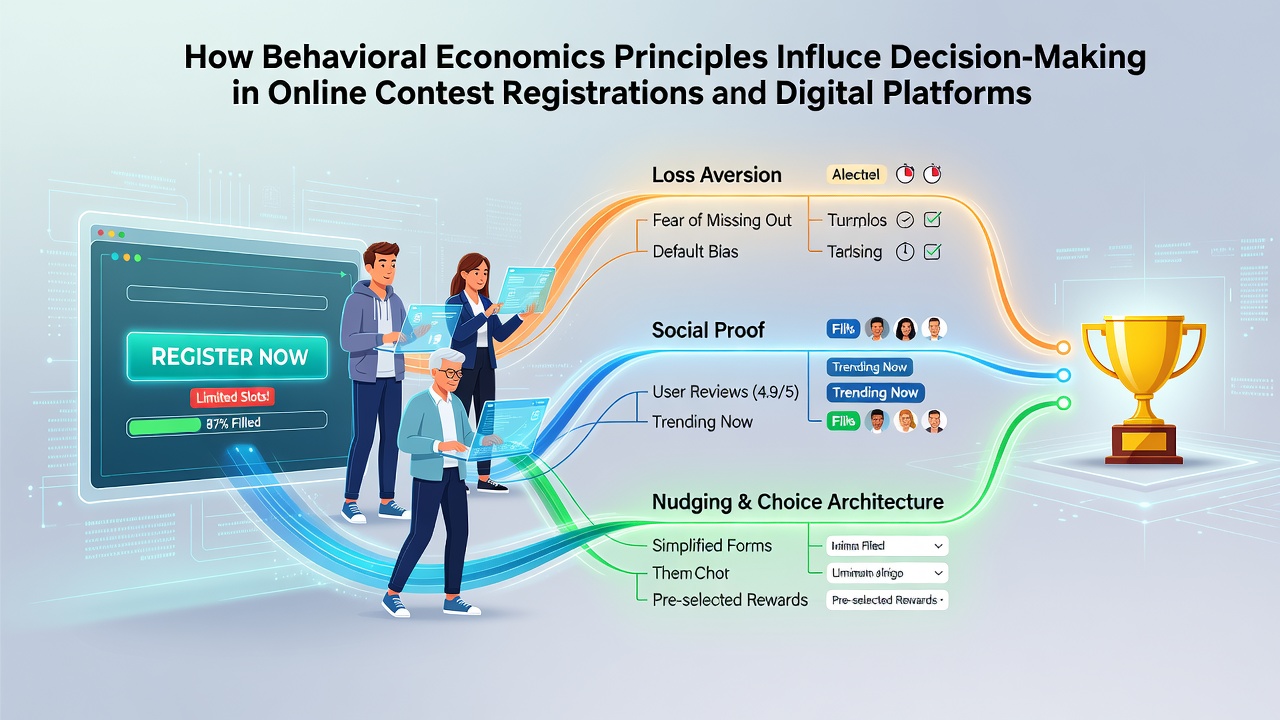
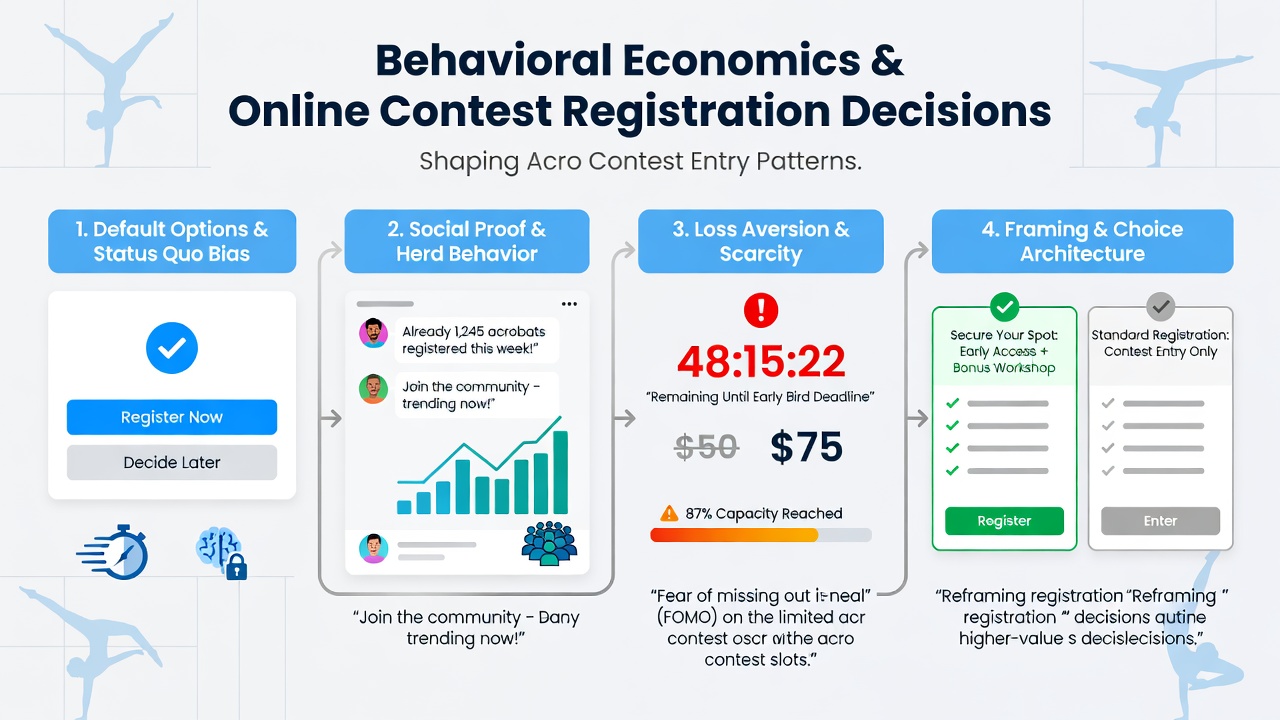
Behavioral economics offers frameworks that explain why individuals complete or abandon contest registration forms on digital platforms, and researchers have documented consistent patterns across multiple studies. Loss aversion leads many users to weigh the potential regret of missing an opportunity more heavily than the effort required to sign up, which data from platform analytics shows increases completion rates when forms highlight limited entry windows. Anchoring effects appear when platforms display suggested entry numbers or previous participant totals, causing registrants to adjust their perceived value of participation around those initial figures rather than independent calculations. Platform designers incorporate default selections in checkboxes for terms agreements and notification preferences, and observations from user testing indicate that these pre-checked options raise submission rates by reducing the cognitive load of active choices. Present bias influences timing decisions as well, with participants often prioritizing immediate small rewards or instant confirmation messages over longer-term prize considerations, a tendency documented in longitudinal tracking of entry sequences.Prospect Theory Applications in Form Interactions
Prospect theory outlines how people evaluate gains and losses relative to reference points, and this principle manifests when contest pages frame entry as avoiding a loss rather than pursuing a gain. Registration interfaces that emphasize phrases about not missing out on upcoming draws produce higher interaction metrics according to aggregated platform reports. Reference dependence also affects how users perceive required fields, since framing an email address request as essential for result notification rather than marketing shifts completion behavior in measurable ways.
Studies tracking form abandonment reveal that users abandon sequences more frequently when multiple high-effort steps appear early, whereas distributing cognitive demands across the process sustains momentum through to final submission. Researchers note these patterns hold across age groups and device types, though mobile interfaces show slightly amplified effects due to smaller screen constraints on visual processing.
Social Proof and Herding in Platform Choices
Digital contest platforms frequently display real-time participant counters or testimonial snippets, and evidence from A/B testing demonstrates that these elements trigger herding behavior where individuals follow perceived majority actions. When counters update dynamically during the registration process, completion percentages rise because users interpret high numbers as validation of the contest's legitimacy and value. Geographic variations appear in how strongly social signals operate, with certain regional user bases responding more to community endorsements than others based on cultural norms around collective decision-making.
Default Effects and Nudge Implementation Across Interfaces
Nudges embedded in registration flows leverage status quo bias, where users tend to accept pre-selected options rather than customize settings. Platforms that set newsletter subscriptions as the default observe sustained engagement rates after initial entry, and regulatory reviews from bodies such as the Australian Competition and Consumer Commission have examined how transparent disclosure of these defaults affects consumer autonomy. Data collected through July 2026 shows continued refinement of these nudges, with platforms adjusting timing and placement to align with observed drop-off points in multi-step forms.
Overchoice presents another challenge, since offering too many contest variants or customization options leads to decision paralysis documented in experimental research. Successful platforms limit visible alternatives while providing clear pathways, which maintains user progression without overwhelming working memory capacity.
Empirical Patterns from Cross-Platform Analysis
Comparative studies across desktop, mobile, and app-based contest environments reveal that friction points like CAPTCHA verifications interact with loss aversion to either accelerate or deter final submissions depending on placement. When verification occurs after users have invested time in earlier fields, abandonment drops because sunk cost considerations outweigh minor additional effort. Academic analyses published through research institutions highlight these dynamics as consistent predictors of registration volume fluctuations during promotional periods.
Cross-referencing behavioral data with eligibility rule variations shows that users adapt strategies based on perceived fairness cues, such as transparent random selection explanations that reduce ambiguity aversion. Platforms incorporating such clarifications report steadier entry patterns across recurring events.
Conclusion
Behavioral economics principles continue to inform registration interface design on digital contest platforms through documented influences on user actions, and ongoing data collection supports iterative adjustments that reflect these established patterns. Observers note that understanding these mechanisms enables more precise mapping of decision sequences without altering underlying contest mechanics. Platforms that apply findings from prospect theory, social proof, and default effects demonstrate measurable differences in completion metrics compared to those relying solely on functional design.