How Data Privacy Regulations Alter Registration Flows in Cross-Border Digital Prize Events
Carlo Peters · Jul 31, 2026
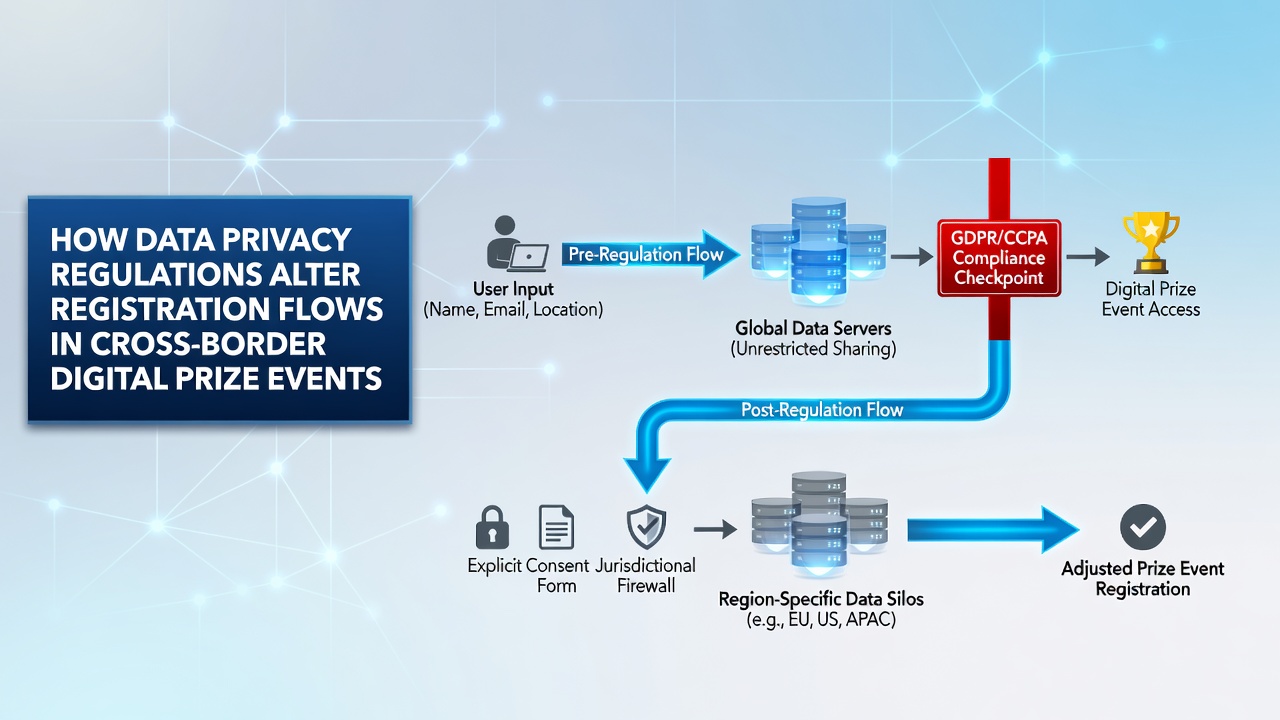
How Data Privacy Regulations Alter Registration Flows in Cross-Border Digital Prize Events
Registration flows for cross-border digital prize events have shifted in measurable ways since the implementation of data privacy laws across multiple jurisdictions, and organizers now adjust form fields, consent prompts, and data routing based on user location signals detected at entry.
European Union rules under GDPR require explicit consent for personal data collection before any prize draw participation begins, which means entry forms split into segmented stages where users first encounter opt-in checkboxes for marketing use and eligibility verification; this structure emerged after enforcement actions that penalized incomplete disclosures in 2023 and 2024.
Similar adjustments appear in California under CCPA and CPRA frameworks, where residents receive prominent links to opt-out requests that redirect data handling away from third-party processors, and event platforms integrate these toggles early in the sequence to avoid later compliance issues during winner selection.
Consent Mechanisms and Form Restructuring
Organizers handling entries from multiple regions deploy geolocation checks that trigger region-specific pathways, and participants from GDPR-covered areas encounter layered consent screens while users from less restrictive zones proceed with fewer interruptions; data collected at this stage includes only the minimum required for verification such as name, email, and age confirmation.
Studies from regulatory bodies show that completion rates drop when forms exceed four mandatory fields, prompting many platforms to move optional marketing permissions behind expandable sections that users can skip without losing entry validity.
One documented case involved a multi-country campaign that introduced progressive profiling, collecting basic identifiers first and then prompting for additional details only after initial consent, which aligned with guidance from the European Data Protection Board and reduced drop-offs in EU traffic.
Cross-Border Data Transfers and Eligibility Checks
International prize events often route entries through servers in different countries, yet privacy regulations now limit transfers unless standard contractual clauses or adequacy decisions cover the destination; this forces platforms to store EU participant data within approved regions while routing non-EU entries through separate pipelines.
Canada's PIPEDA and Australia's Privacy Act impose comparable restrictions, requiring organizers to disclose storage locations and obtain consent for overseas transfers before registration completes, and many systems now display jurisdiction-specific notices during the address collection step.
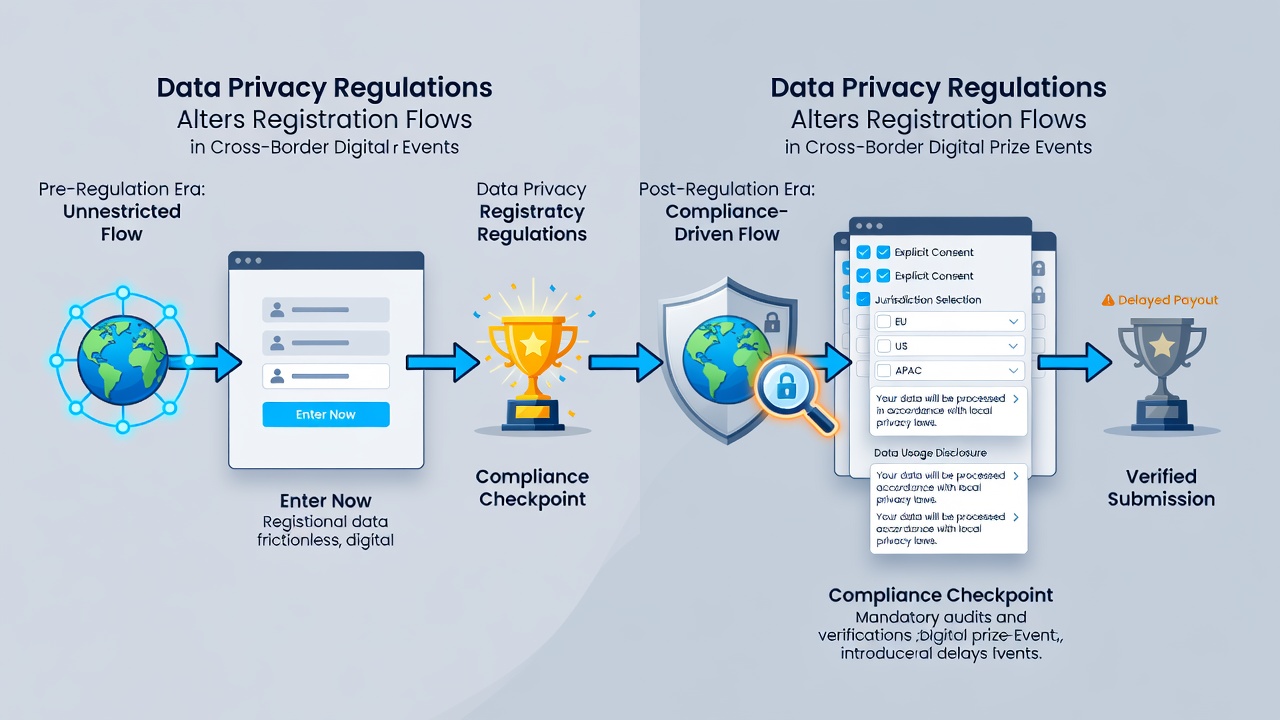
July 2026 marks the expected rollout of updated enforcement priorities from several data protection authorities, including expanded audits on automated decision-making in winner selection, and platforms have begun testing additional transparency layers that explain how algorithms use entry data without revealing proprietary logic.
Impact on User Pathways and Verification
Verification steps for age and residency now occur after consent collection rather than before, which satisfies data minimization principles while still allowing organizers to filter ineligible entries; this reversal appears in platforms serving North American and European audiences simultaneously.
Research from academic institutions tracking digital promotions indicates that forms incorporating privacy policy summaries inline with checkboxes achieve higher submission rates than those linking to full documents, and cross-border operators have adopted this pattern widely since 2025.
Observers note that real-time consent withdrawal options integrated into registration dashboards let participants revoke permissions mid-process, which maintains compliance yet requires backend systems to flag and exclude those records from subsequent draws without disrupting overall event operations.
Technical Adaptations Across Platforms
API integrations between entry systems and privacy management tools now handle jurisdiction detection automatically, routing data flows through compliant channels and logging consent timestamps for audit trails; these updates emerged in response to fines issued against non-compliant campaigns in prior years.
Industry reports from research organizations highlight that events using unified registration interfaces without regional branching experienced higher complaint volumes, leading most operators to adopt dynamic form builders that adjust visible fields based on detected IP and browser settings.
Those managing recurring prize draws have documented reduced support tickets after implementing clear data retention timelines displayed at entry, which informs users how long records remain stored before automatic deletion cycles begin.
Conclusion
Data privacy regulations continue to reshape registration sequences in cross-border digital prize events through mandatory consent structures, minimized data fields, and segmented routing that respects jurisdictional differences, and platforms maintain compliance by updating flows ahead of scheduled enforcement milestones such as those anticipated in July 2026. According to guidance from the European Commission data protection resources, these adaptations ensure eligibility verification proceeds without unnecessary data exposure, while Canadian privacy frameworks from the Office of the Privacy Commissioner reinforce similar transparency requirements for international transfers.