How Interactive Elements Reshape Completion Patterns During Digital Reward Form Submissions
Iris Wolf · Jun 17, 2026
How Interactive Elements Reshape Completion Patterns During Digital Reward Form Submissions
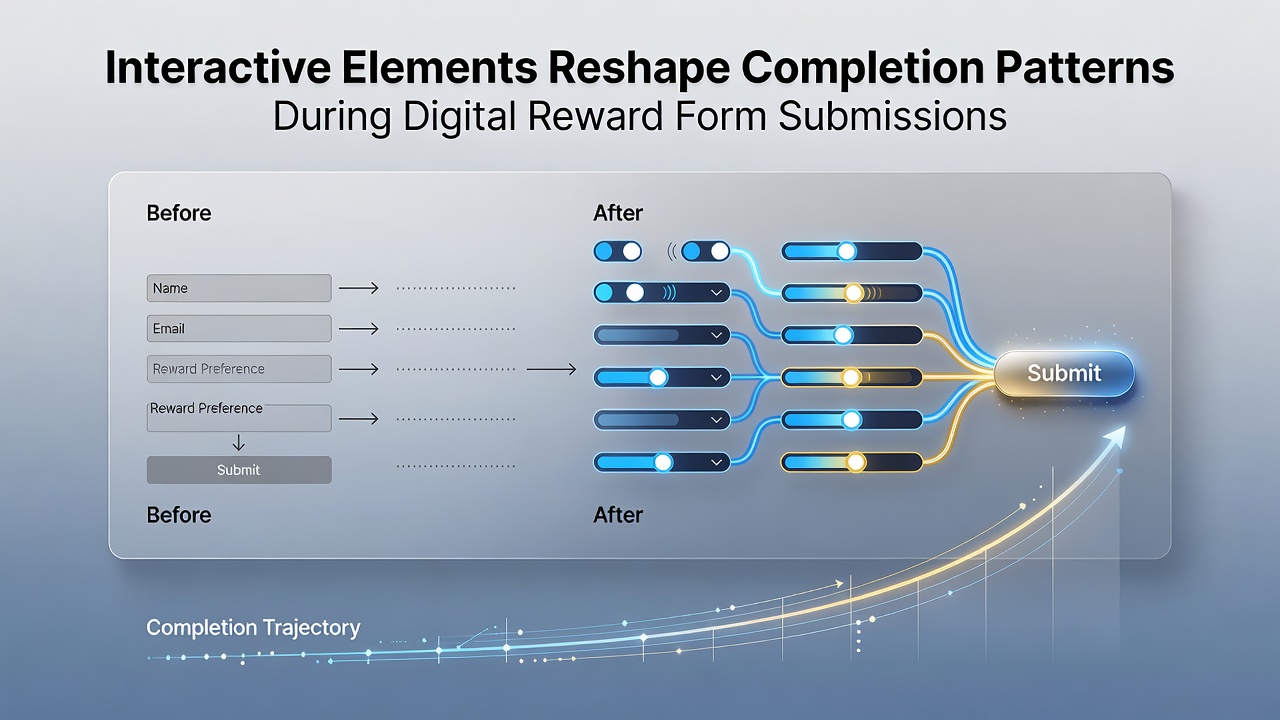
Digital reward platforms have incorporated interactive elements into entry forms for years, yet patterns in completion rates continue to shift as designers refine how these features guide users through required steps. Progress bars, real-time validation, conditional questions, and instant feedback mechanisms alter the sequence and speed at which participants finish submissions, according to multiple user experience analyses conducted across prize promotion sites in 2025 and early 2026.
Forms that once presented static lists of fields now adapt based on prior answers, and completion data collected from large-scale reward events shows measurable differences in drop-off points when these adaptive features activate. Researchers tracking thousands of daily entries note that participants who encounter immediate confirmation of correct entries tend to proceed further than those facing delayed or absent feedback.
Progress Indicators and Step-by-Step Guidance
Visual progress indicators represent one of the most common interactive additions in modern reward forms, breaking lengthy submissions into visible stages that update as users advance. Data compiled from recurring prize promotions indicates that forms displaying percentage completion or numbered steps experience fewer mid-form exits compared with single-page layouts that offer no visual markers of advancement. Observers tracking behavior during June 2026 campaigns recorded higher continuation rates once users passed the first progress checkpoint, suggesting the simple act of seeing movement encourages persistence through subsequent sections.
Conditional logic further refines this process by revealing or hiding fields depending on earlier selections, which reduces perceived length while maintaining eligibility requirements. Studies of mobile-first entry sequences demonstrate that participants using these dynamic displays complete submissions in fewer overall clicks, even when total required information remains constant across variants.
Real-Time Validation and Instant Feedback Loops
Real-time validation checks entries for format accuracy as soon as users move to the next field, preventing the accumulation of errors that surface only at final submission. Platforms employing these checks report lower rates of final-stage abandonment because corrections happen inline rather than requiring full restarts. Figures from industry reports on digital promotions show error correction time drops significantly when validation messages appear immediately beside active inputs instead of in summary lists after submission attempts.
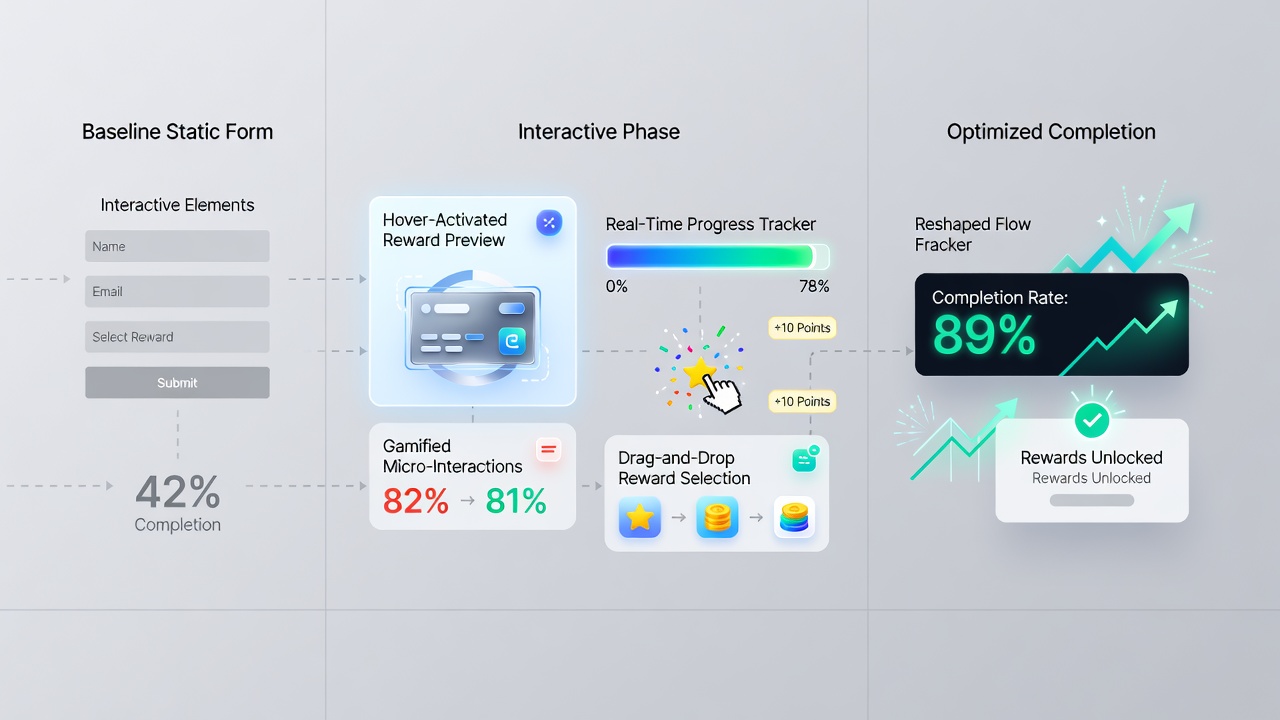
Instant feedback also extends to eligibility indicators that confirm whether entered details meet basic criteria before the user reaches the end. This approach, observed across multi-platform campaigns, shifts completion patterns by front-loading potential disqualifications and allowing quick adjustments rather than post-submission notifications that arrive hours or days later.
Behavioral Shifts Across Device Types and Demographics
Device preferences influence how interactive elements perform in practice, with touch-based interfaces responding differently to drag-and-drop selections or swipe gestures than desktop versions using mouse-driven interactions. Research compiled by academic groups studying online engagement patterns found that younger participants interacting via mobile devices completed gamified reward forms at higher rates when micro-animations accompanied successful field entries, whereas desktop users showed steadier progress regardless of animation presence.
Demographic tracking during large seasonal promotions reveals that first-time entrants benefit more from guided tooltips and example pop-ups than returning participants who have already navigated similar sequences. These variations appear consistently in aggregated logs from reward platforms operating across North America and Europe, where session recordings document shorter hesitation periods at complex fields once contextual help activates automatically.
Integration With Eligibility and Compliance Checks
Interactive elements now frequently link directly to backend eligibility verification, pulling real-time status updates on prior entries or geographic restrictions without forcing users to leave the form. Regulatory frameworks in regions such as the European Union require transparent data handling during these checks, and platforms have adapted by embedding compliance confirmations within the flow rather than as separate pages. European Commission data protection guidelines outline standards that many operators follow when designing these live verifications.
Cross-field dependencies, such as address validation tied to postal code databases, further reduce incomplete submissions by catching mismatches early. Completion statistics gathered from ongoing prize events indicate that forms incorporating such linked checks see fewer partial entries abandoned due to later discovery of invalid information.
Conclusion
Interactive elements continue to modify how participants move through digital reward submissions by providing immediate orientation, error correction, and adaptive content that aligns with eligibility rules. Patterns observed through platform analytics and independent studies point to measurable changes in completion timing and drop-off locations whenever these features receive updates or refinements. As reward programs expand across additional devices and regions, ongoing data collection will likely reveal further adjustments in user pathways shaped by evolving interface capabilities.