How Prize Disclosure Timing Shapes Initial Click-Through Behaviors Across Digital Reward Campaigns
Greta Albrecht · Aug 21, 2026
How Prize Disclosure Timing Shapes Initial Click-Through Behaviors Across Digital Reward Campaigns
Digital reward campaigns rely on precise timing for prize disclosure to influence how users first interact with promotional content, and analysts track these patterns through aggregated platform data across multiple regions. When campaign operators reveal prize details at the landing page stage versus after form completion, initial click-through rates shift in measurable ways according to studies conducted on recurring promotions.
Patterns in Early Disclosure Versus Delayed Reveals
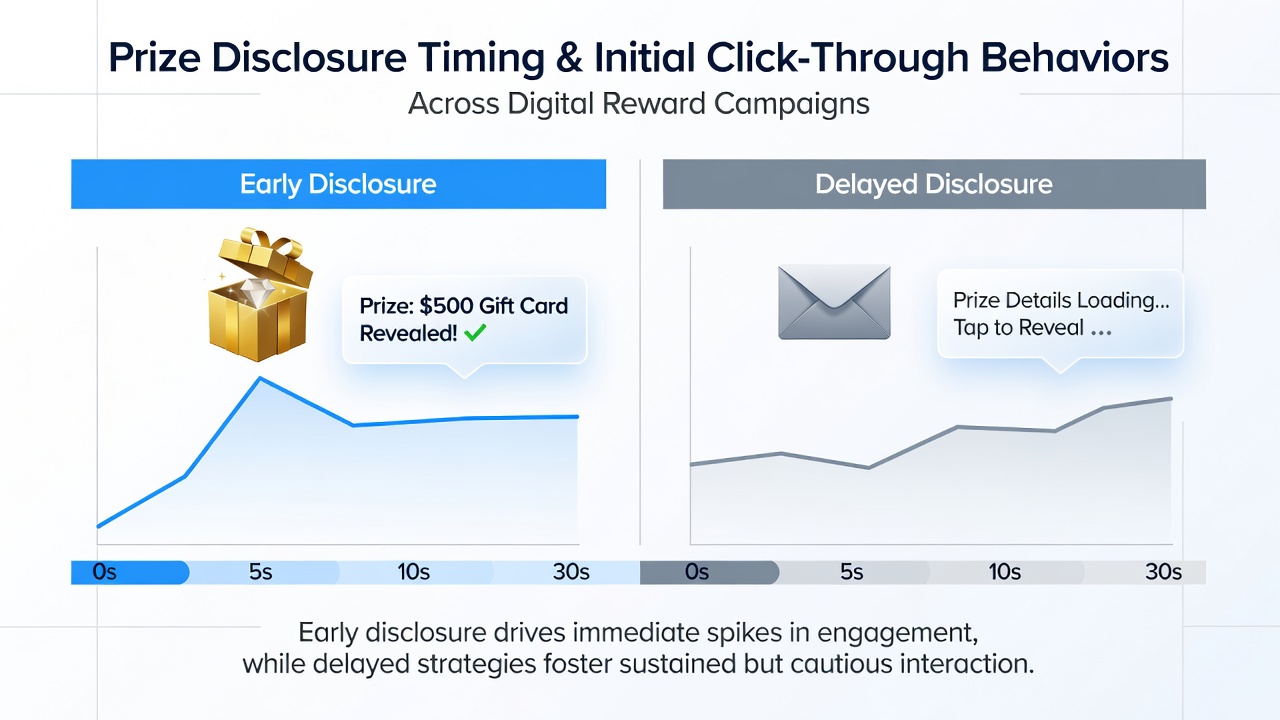
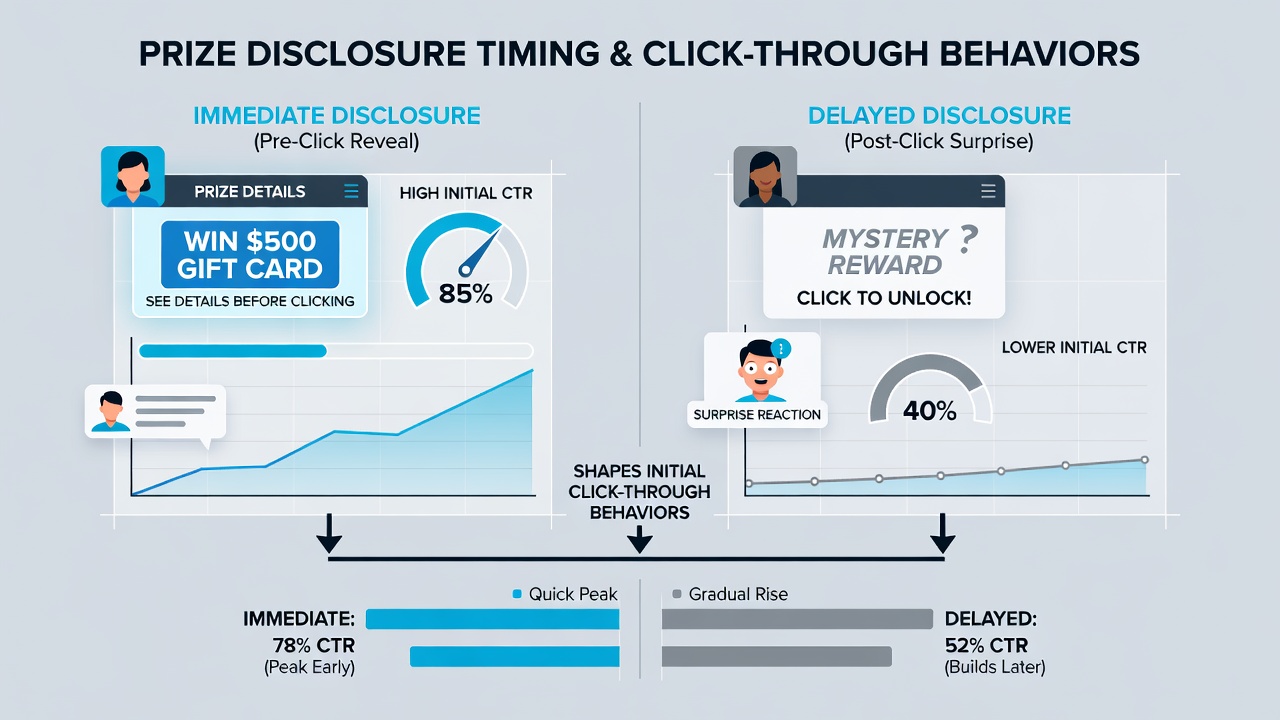
Campaigns that present prize values immediately upon ad click record different engagement sequences compared to those that withhold details until registration begins, and researchers note this distinction holds across desktop and mobile traffic sources. Data collected from promotions running through mid-2026 shows that upfront disclosure correlates with higher bounce rates on certain platforms while simultaneously increasing time-on-page metrics once users proceed past the initial screen. Observers track these behaviors through heat-mapping tools and session recordings that capture the moment a user decides to advance or exit.
Those who study entry funnels point out that delayed disclosure often sustains curiosity-driven clicks, yet it also raises the likelihood of form abandonment once the prize information appears. Figures from campaigns in August 2026 reveal that entries initiated after a teaser-style reveal completed at rates 12 to 18 percent lower than campaigns disclosing prize tiers within the first interaction screen. Such differences emerge consistently when operators segment traffic by device type and referral source.
Platform-Specific Responses to Timing Variations
Social media placements respond differently to prize timing than email or search-driven traffic, and campaign managers adjust disclosure sequences accordingly. On short-form video platforms, an immediate prize highlight in the creative itself drives initial clicks, while follow-through depends on what appears once the destination page loads. Researchers examining multi-platform data sets find that email campaigns achieve steadier click progression when prize information surfaces after a user has already opened the message and begun the entry process.
Search advertising presents another layer because users arrive with explicit intent, and the timing of prize visibility influences whether they continue past the ad. Reports compiled by the Federal Trade Commission on promotional disclosures indicate that transparency at the ad level reduces later drop-off in several tested formats. Meanwhile, data shared by the Competition Bureau Canada on digital marketing practices shows similar regional patterns in how timing affects user progression through entry flows.
Behavioral Metrics Across Seasonal and Recurring Events
Recurring campaigns running on fixed schedules provide clearer comparisons because audience overlap allows analysts to isolate timing as the variable. In August 2026 promotions, operators who shifted prize disclosure forward by 48 hours recorded measurable changes in click distribution across age cohorts, with younger segments showing quicker initial engagement and older segments displaying steadier progression once details appeared. These shifts appear in session logs that separate first-click actions from subsequent form interactions.
Industry reports from research groups tracking reward platforms note that teaser disclosures paired with countdown timers maintain click momentum longer than static prize announcements. The same reports document that campaigns using randomized prize tiers revealed only after partial completion experience elevated click-through from curiosity but encounter steeper drop-offs at the final confirmation stage. Observers attribute these outcomes to differences in perceived commitment required before users see the full reward structure.
Cross-Regional Observations on Disclosure Practices
Operators managing campaigns across borders encounter additional variables tied to local disclosure norms, and timing adjustments often reflect regulatory expectations in each market. Data aggregated from North American and European promotions running concurrently in 2026 demonstrate that regions with stricter transparency rules at the advertising stage record more consistent click-to-entry ratios when prize information appears early. In contrast, markets allowing greater flexibility in initial messaging show wider variance depending on the exact moment operators choose to surface details.
Academic analyses of user navigation logs indicate that the interval between click and prize reveal affects trust signals differently depending on whether users arrive via organic search or paid placements. Those examining these logs emphasize that the first few seconds after arrival determine whether the session registers as a qualified click or an immediate exit, and disclosure timing directly modulates that window.
Conclusion
Timing decisions around prize disclosure continue to shape how digital reward campaigns convert initial clicks into completed entries, and platform data from 2026 campaigns provide ongoing benchmarks for these dynamics. Campaign operators monitor these patterns through segmented analytics that separate disclosure moment from other variables such as creative format or audience source. As new measurement tools emerge, the relationship between reveal timing and click-through behaviors remains a focal point for refining entry flows across reward platforms.