Legal Frameworks Shaping Participation in Cross-Border Digital Prize Distributions
Greta Albrecht · Aug 2, 2026

Legal Frameworks Shaping Participation in Cross-Border Digital Prize Distributions
Digital prize distributions that cross national borders encounter a patchwork of legal requirements that determine who can participate and how operators must structure their promotions. These rules address eligibility verification, prize taxation, consumer disclosures, and data handling, with enforcement varying sharply by region. Observers note that participants in multiple countries often encounter differing age thresholds, residency restrictions, and entry method limitations that stem directly from local statutes.
Regional Regulatory Structures and Their Reach
Authorities in the United States enforce federal guidelines through the Federal Trade Commission while individual states maintain separate promotion laws that frequently require registration or bonding for larger prize pools. Data indicates that operators running international campaigns must reconcile these state-level rules with federal advertising standards to avoid enforcement actions. In contrast, Canadian frameworks under the Competition Act emphasize clear disclosure of odds and no-purchase entry options, creating distinct compliance paths for cross-border entries from that jurisdiction.
European Union member states apply harmonized consumer protection directives alongside national implementation measures that govern prize promotions. Figures reveal that recent updates to distance-selling rules have tightened requirements around automated entry systems and winner notification timelines. Australian regulators operating under the Australian Consumer Law similarly mandate prominent terms disclosure, and compliance reports show increased scrutiny of digital platforms that accept entries from multiple time zones without localized consent mechanisms.
Data Privacy Obligations Across Jurisdictions
Cross-border prize events trigger overlapping data protection statutes that affect how organizers collect, store, and transfer participant information. The EU General Data Protection Regulation sets strict consent and transfer standards that many global operators adopt as baseline practice even when processing entries from outside Europe. Canadian privacy legislation and emerging rules in other regions add further layers, requiring explicit notice about data sharing with third-party processors located in different countries.
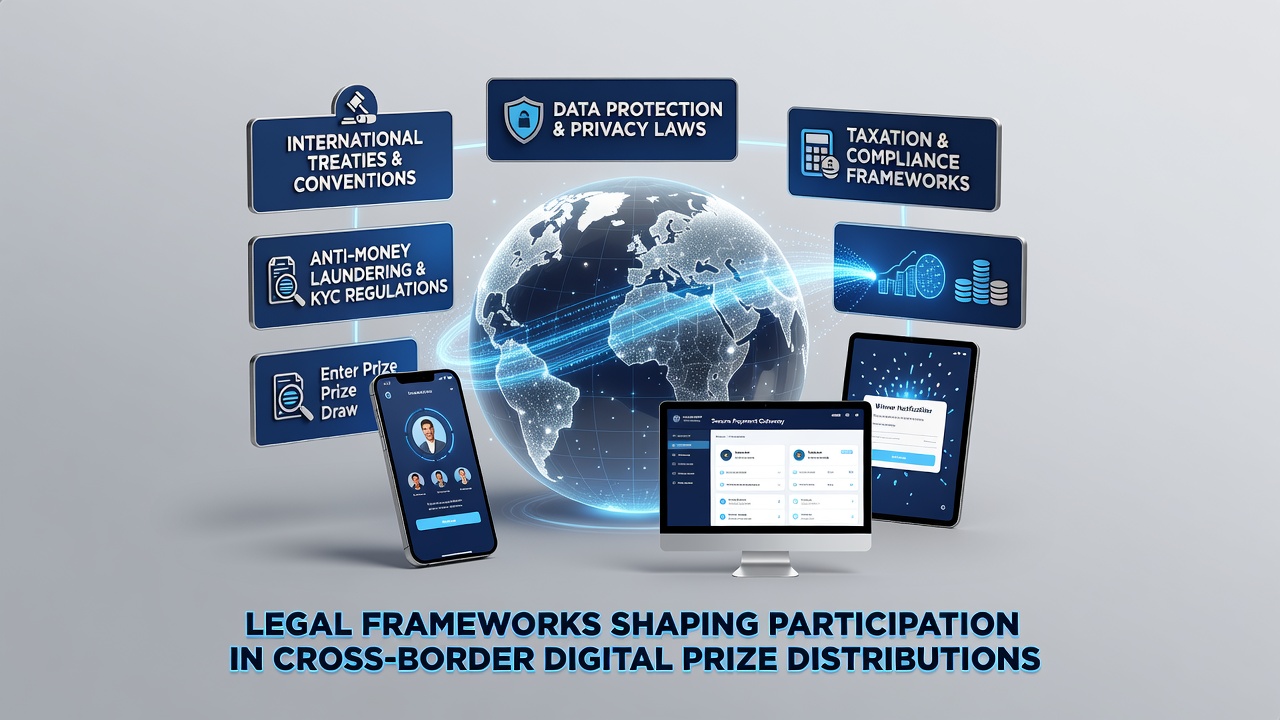
Research from academic institutions tracking digital promotion trends shows that entry completion rates drop measurably when participants encounter multiple consent prompts tied to differing national requirements. Operators have responded by implementing geo-specific form flows that present only the disclosures mandated by the entrant’s detected location, thereby reducing friction while maintaining regulatory alignment.
Taxation and Eligibility Verification Challenges
Tax authorities in various countries treat prize winnings differently, which influences both operator reporting duties and participant willingness to enter. United States Internal Revenue Service rules require detailed reporting for prizes above certain thresholds, while other nations apply withholding at source or treat winnings as taxable income under broader personal income regimes. These variations create administrative burdens that shape how promotions are advertised in specific markets.
Eligibility screening tools now routinely incorporate automated checks against sanctions lists and age-verification databases to satisfy multiple jurisdictions simultaneously. Studies conducted by research groups examining digital contest platforms indicate that such systems reduce ineligible entries while preserving participation volumes from permitted regions. Operators that fail to update these checks in line with evolving lists face penalties that can halt campaigns mid-cycle.
Developments Anticipated by August 2026
Scheduled regulatory reviews in several jurisdictions point toward refined guidance on automated decision-making in winner selection and expanded obligations around algorithmic transparency. Proposed measures in North America and parts of Asia-Pacific aim to standardize disclosure formats for multi-country campaigns, potentially easing some compliance costs while introducing new audit requirements. Industry associations have begun publishing comparative analyses of these upcoming changes to help operators prepare updated entry terms and technical integrations ahead of the 2026 timeline.
Conclusion
Legal frameworks governing cross-border digital prize distributions continue to evolve through coordinated yet distinct national approaches. Participation patterns reflect these rules through differences in entry volumes, demographic reach, and operational design choices. Organizations that monitor regulatory shifts across key markets maintain smoother compliance pathways while supporting broader access for eligible entrants worldwide.