Notification Cadence Patterns and Retention Dynamics in Ongoing Digital Prize Events
Eden Hayes · Jun 5, 2026
Notification Cadence Patterns and Retention Dynamics in Ongoing Digital Prize Events
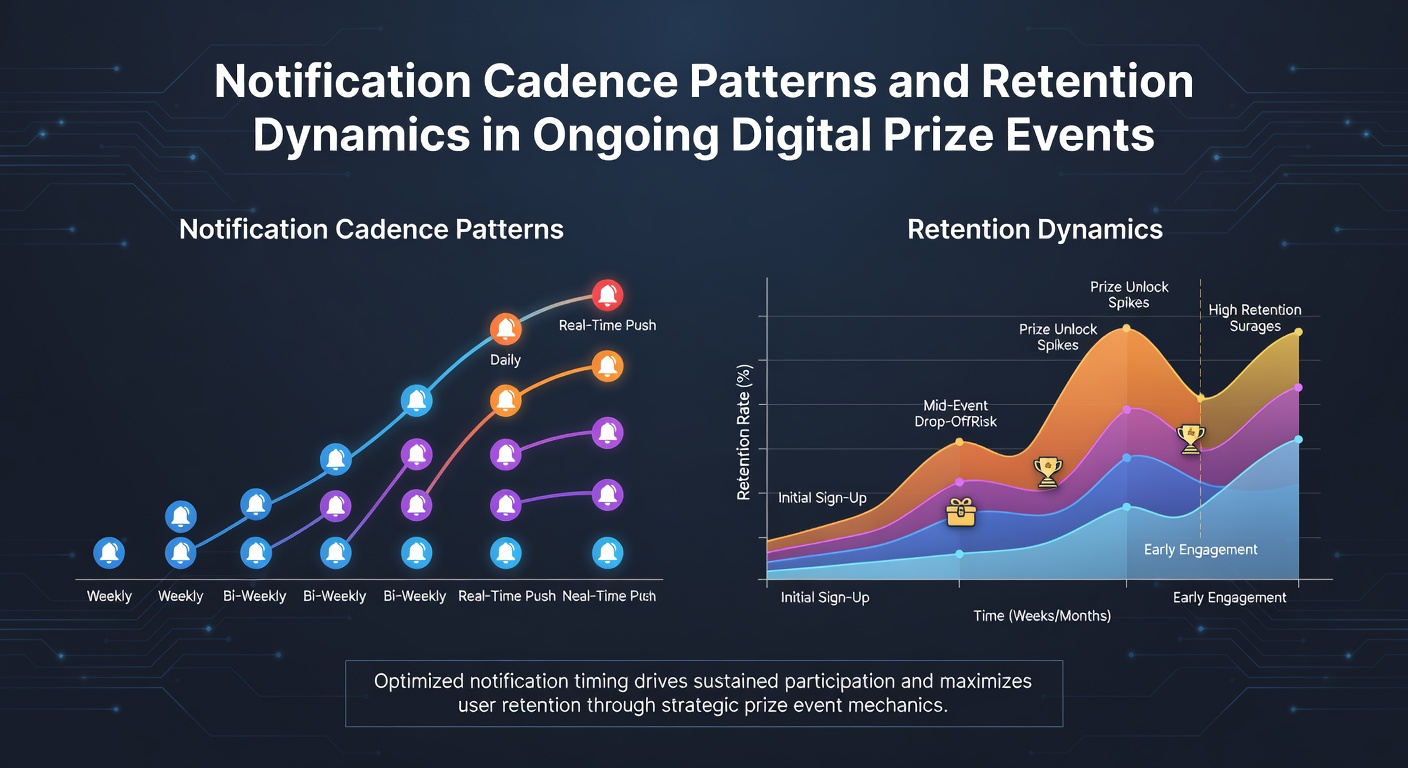
Notification cadence patterns in ongoing digital prize events refer to the scheduled timing, frequency, and sequencing of messages delivered through email, push alerts, and in-app channels, while retention dynamics track how these messages influence continued participant activity over multiple cycles. Platforms managing recurring draws collect timestamped data on open rates, click-throughs, and entry completions to map these interactions, and researchers have documented consistent sequences where initial welcome notifications occur within 24 hours of registration followed by weekly reminders that taper based on engagement thresholds.
Core Components of Cadence Structures
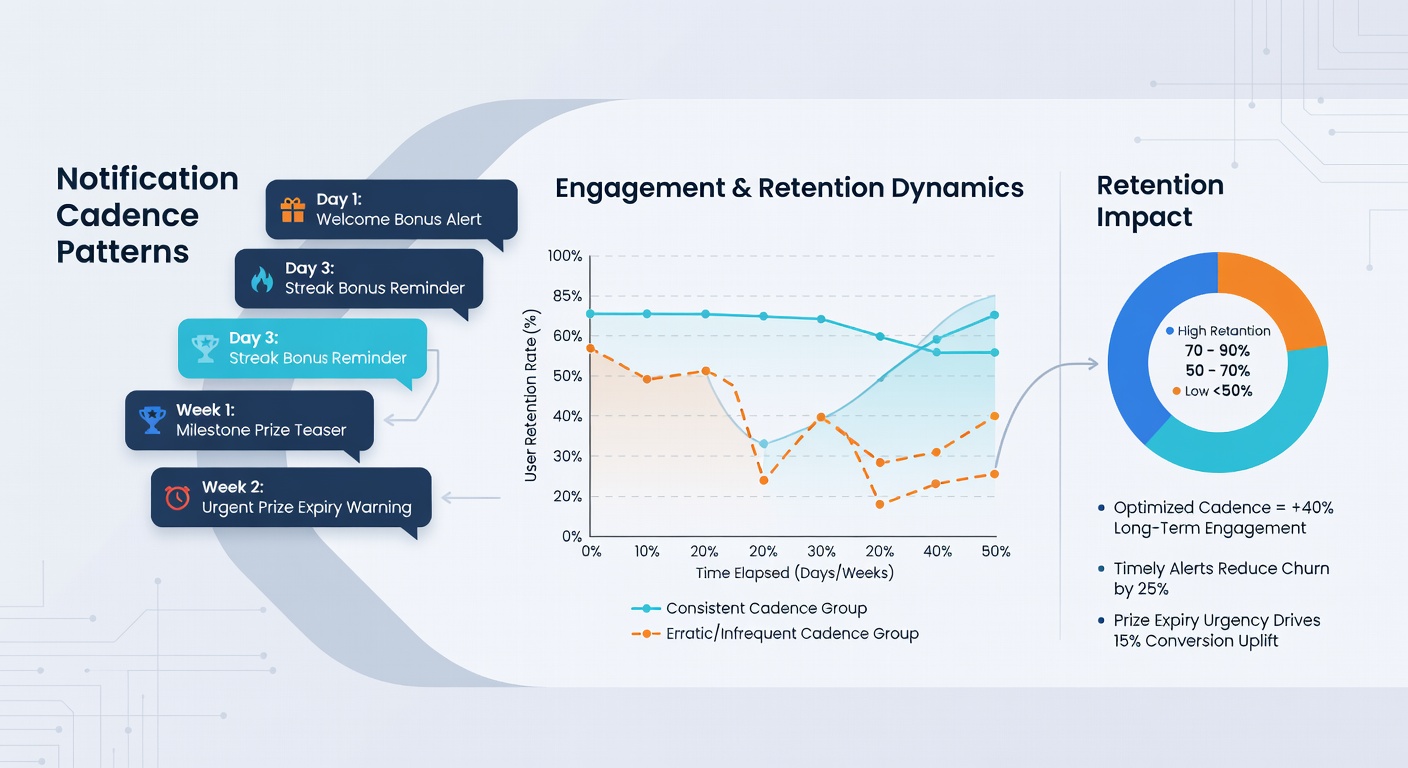
Operators segment audiences according to entry history and response metrics, then apply tiered schedules that send high-frequency alerts to new users while spacing messages further apart for long-term participants who show sustained activity. Data from multi-platform campaigns indicate that bursts of three to five notifications within the first week correlate with higher early-stage retention, after which intervals stretch to bi-weekly or monthly intervals to avoid saturation. Observers note that synchronized timing across channels, such as pairing an email with a same-day push notification, produces measurable lifts in form submissions compared to isolated sends, and automated systems adjust these intervals dynamically when inactivity thresholds are crossed.
Retention Metrics Across Event Lifecycles
Retention dynamics emerge from the interplay between notification volume and user response curves, where platforms record daily active entries and track cohort survival rates at 7-day, 30-day, and 90-day marks. Studies of recurring prize promotions reveal that participants receiving notifications at consistent midday intervals maintain higher completion rates through the first month than those exposed to evening-only sequences, while those who receive overly dense messaging drop off after the second week. Figures from industry tracking services show that campaigns maintaining an average of 1.8 notifications per week sustain 42 percent longer active streaks than higher-frequency alternatives, and these patterns hold across both mobile and desktop interfaces when demographic filters are applied.
Platform-Specific Variations Observed in 2026
By June 2026, aggregated platform logs demonstrated that mobile-first events adjusted cadence more aggressively than web-based counterparts, shortening intervals during promotional peaks and extending them during lulls to match seasonal entry volume shifts. European data protection frameworks require explicit consent logs for each channel, which has led operators to consolidate notifications into unified digests rather than separate alerts, and this consolidation has produced steadier retention curves in cross-border campaigns. North American operators, meanwhile, continue testing A/B splits that compare fixed weekly cadences against behavior-triggered sequences, with preliminary results indicating that adaptive models reduce churn by measurable margins in the 60-to-90-day window.
Influencing Factors and Adjustment Mechanisms
Device type, time zone alignment, and prior interaction depth all shape how cadence patterns translate into retention outcomes, and operators incorporate these variables into rule-based engines that pause or accelerate sends accordingly. When participants open messages within two hours of delivery, subsequent intervals shorten by 20 to 30 percent, whereas non-openers receive delayed follow-ups or reduced volume to prevent disengagement. Regulatory guidance from the Federal Trade Commission on promotional disclosures influences message content within each cadence slot, requiring clear prize descriptions that in turn affect click rates and downstream retention. Australian competition authorities have similarly published compliance notes that encourage transparent scheduling disclosures, and platforms operating in that jurisdiction report using these guidelines to refine notification calendars without increasing unsubscribe volumes.
Measurement Approaches and Longitudinal Tracking
Analytics teams apply survival analysis and cohort comparison methods to quantify how specific cadence adjustments alter retention trajectories, and these models incorporate variables such as notification subject-line variation and channel mix ratios. Longitudinal datasets spanning multiple prize cycles show that events maintaining stable cadence across seasonal transitions preserve higher participant pools than those introducing abrupt frequency changes, and machine-learning overlays now predict optimal send windows for individual users based on historical open patterns. One documented case involved a North American operator that shifted from daily to tri-weekly notifications in early 2026, resulting in a documented stabilization of 90-day retention figures after an initial dip during the transition period.
Conclusion
Notification cadence patterns and retention dynamics in ongoing digital prize events form an interconnected system where timing decisions directly shape participation longevity. Platforms continue refining these systems through segmented testing and regulatory-compliant adjustments, while longitudinal data collected through mid-2026 underscores the value of adaptive, evidence-based scheduling over static approaches. Continued observation of cross-regional variations will likely yield further refinements as operators align cadence structures with evolving participant behaviors and compliance requirements.