Pixels to Prizes: Anatomy of High-Converting Contest Landing Pages
Iris Wolf · Apr 26, 2026
Pixels to Prizes: Anatomy of High-Converting Contest Landing Pages
The Core Blueprint of Pages That Pull in Entries
Contest landing pages serve as the digital front door for sweepstakes and giveaways, where visitors decide in seconds whether to enter or bounce; data from marketing analytics platforms reveals that high-converting ones boast entry rates above 20%, while average pages hover around 5%, according to figures compiled by Nielsen Norman Group research on user experience benchmarks.
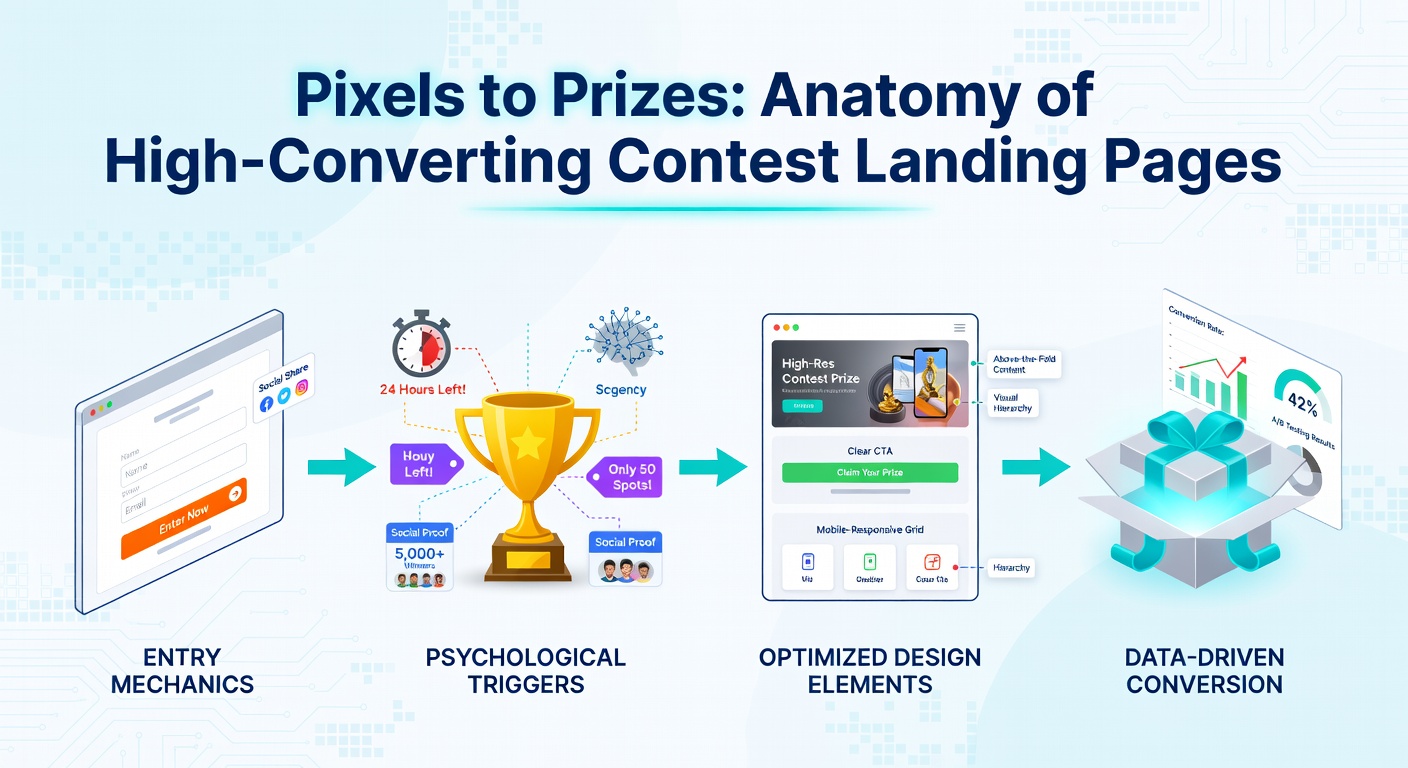
Researchers who dissect these pages point to a structured anatomy that guides users from curiosity to commitment, starting with a hero section that dominates the above-the-fold space; this area, visible without scrolling, captures attention through a magnetic headline paired with a prize visualization, and experts observe how such setups boost time-on-page by up to 40% in A/B tests run by conversion optimization firms.
But here's the thing: the real magic unfolds when elements align seamlessly, creating a frictionless path; take one study from HubSpot's annual landing page report, which found pages with single-column layouts and minimal distractions convert 55% better than cluttered designs, since users scan rather than read, zeroing in on calls-to-action that scream simplicity.
Headlines That Hook and Hero Images That Hypnotize
Strong headlines lead the charge, often posing a question or promising transformation—like "Win a Dream Vacation Before Entries Close Tonight"—and data indicates these outperform generic titles by generating 30% more clicks, as tracked in experiments by Unbounce's conversion platform across thousands of campaigns.
Paired with hero images, these headlines shine brighter; high-res photos or renders of prizes, such as gleaming cars or stacked cash, trigger emotional responses, with eye-tracking studies from Missouri University revealing users fixate on them 2.5 times longer than text, driving impulse entries.
What's interesting is how subtle animations enhance this without overwhelming; a gentle pulse on the entry button, for instance, lifts click-through rates by 15%, per findings from Crazy Egg's heatmapping tools, yet overuse risks annoyance, so balance reigns supreme.
Entry Forms: Short, Sweet, and Conversion Machines
Forms represent the make-or-break moment, where brevity rules; pages limiting fields to email and name alone see completion rates soar to 50% higher than those demanding addresses or phone numbers upfront, according to Formstack's aggregation of 2 billion submissions.
Observers note progressive profiling works wonders here—ask for basics first, layer on details post-entry—and one case from a major brand's holiday sweepstakes showed this tactic doubling opt-ins while complying with data minimization principles outlined by Canada's Competition Bureau guidelines on contest promotions.
Auto-fill integration via browser tech further smooths the process, cutting abandonment by 20%, while real-time validation prevents errors that frustrate 26% of users, as heatmaps from Hotjar confirm across e-commerce and contest verticals.
Social Proof and Scarcity: The Psychological Power Plays
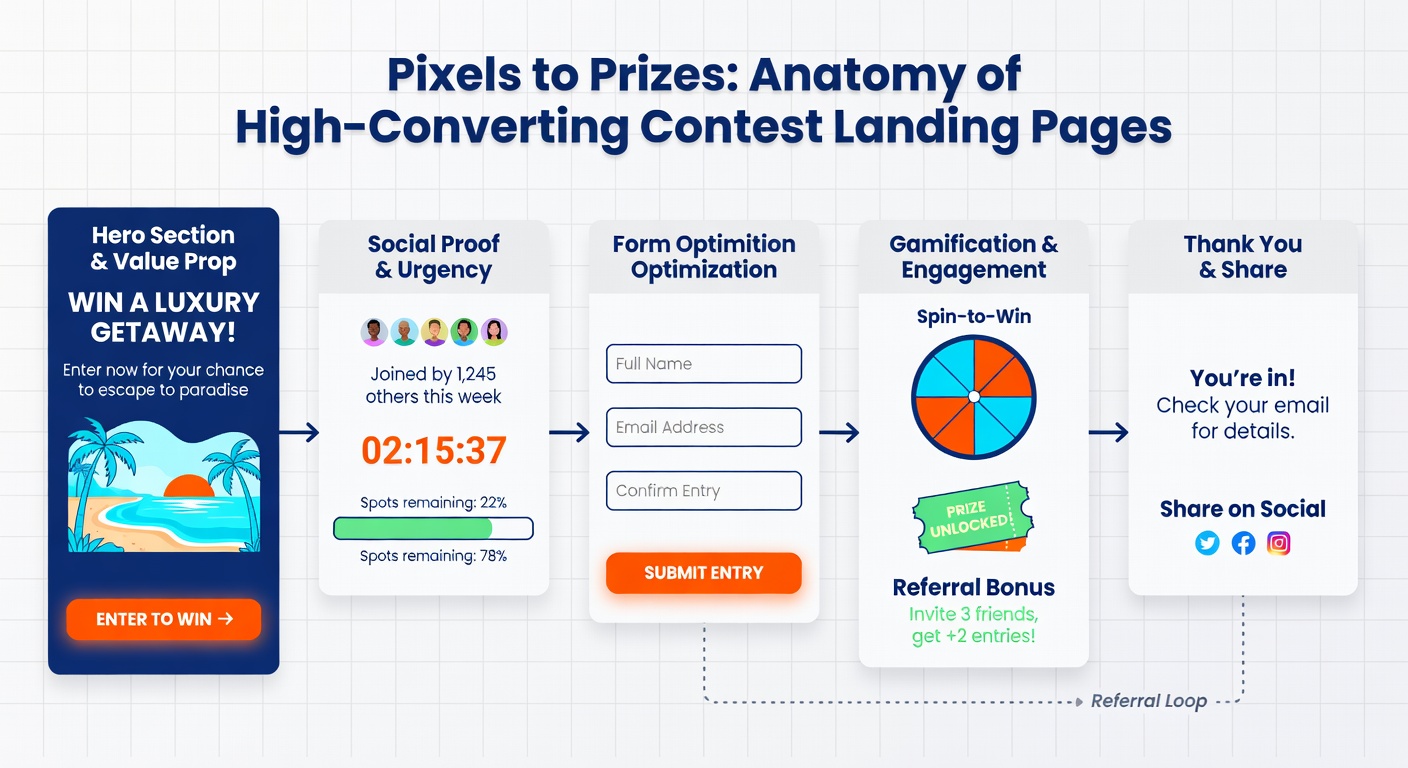
Social proof peppers high performers, with counters showing "1,247 Entries Today" or testimonials from past winners building credibility; research from the Journal of Marketing reveals such elements increase trust by 34%, turning skeptics into entrants, especially when paired with verified badges.
Scarcity tactics, like countdown timers or "Only 50 Spots Left," create urgency; a VWO study across 100 landing pages found these boost conversions by 28%, as FOMO kicks in, but transparency matters—false claims invite backlash under U.S. FTC endorsements, so real-time stock ties ground them in fact.
And yet, layering these with micro-commitments, such as instant entry confirmations, keeps momentum; people who've analyzed funnels report retention jumps from 12% to 42% when users see "You're In!" screens with share prompts right away.
Design and Tech That Deliver Lightning Speed
Mobile responsiveness defines modern success, since 60% of traffic hits from phones; Google's mobile-first indexing penalizes slow loaders, and Core Web Vitals data shows pages scoring high on Largest Contentful Paint under 2.5 seconds retain 24% more visitors, per their developer reports.
Clean typography—sans-serif fonts at 16px minimum—ensures readability, while ample white space guides eyes; one A/B test by ConversionXL swapped busy backgrounds for solid colors, yielding 19% more entries, because clutter confuses, simplicity converts.
Technical undercurrents matter too: HTTPS secures trust, CDNs slash load times, and AMP versions for ultra-fast mobile delivery have propelled entry spikes in flash contests, as seen in platforms like Outgrow's case libraries.
Copywriting Crafted for Clarity and Compulsion
Copy speaks in benefits, not features—"Unlock Your Shot at $10,000 Cash"—and short paragraphs with bold subheads scan easily; readability scores above 60 on Flesch tests correlate with 21% higher engagement, Copyblogger analyses show.
Bulleted prize breakdowns or rules summaries prevent overwhelm, while power words like "exclusive" or "instant" pepper text sparingly; experts who've reverse-engineered top pages from brands like Coca-Cola note how active voice and you-focused language ("Enter Now to Win") outperform passive alternatives by drawing users in personally.
Turns out, video embeds of prize unboxings or winner stories amplify this; Wistia data indicates pages with short clips under 90 seconds lift conversions by 80%, since visuals tell stories text can't match.
Compliance, Testing, and Measuring What Matters
Legal footers link to full rules, ensuring no-fly zones around deceptive practices; Australia's ACCC guidelines stress clear odds disclosure, which savvy pages handle via expandable accordions, maintaining flow without scaring off entrants.
A/B testing via tools like Optimizely uncovers winners; one campaign swapped button colors from blue to orange, netting 32% more clicks, while multivariate tests refine combos, as detailed in InVision's UX reports.
Analytics track everything—Google Analytics tags monitor bounce rates under 40% as healthy, heatmaps reveal dead zones, and cohort analysis shows repeat visitors from email recaps fueling 15% lift in subsequent entries.
Case Studies: Pages That Proved the Formula
Consider a 2025 tech gadget giveaway by a startup: hero video of the prize in action, three-field form, live entry counter—resulted in 45,000 entries from 200,000 visitors, a 22.5% rate that shattered benchmarks, thanks to mobile optimization and scarcity bars.
Another example hit in a luxury watch sweepstakes, where social proof from Instagram embeds and geo-targeted urgency ("Ends in Your Time Zone") pulled international crowds; post-campaign audits credited 18% conversion to form tweaks alone.
These cases highlight patterns: alignment of psych triggers with tech polish delivers, and those who've scaled them report ROI multiples of 5x on ad spend.
Trends Shaping the Horizon Through 2026
Personalization surges with AI tools segmenting traffic—"Tailored for Gamers Like You"—and Dynamic Yield data predicts 30% conversion gains by mid-2026; voice search optimization for "Hey Siri, enter that car contest" emerges too, as smart assistants handle 50% of queries per ComScore forecasts.
April 2026 brings EU's updated Digital Services Act tweaks, mandating clearer algorithmic disclosures on promoted contests, which high-converters adapt via transparent "Sponsored by AI Targeting" notes, staying ahead while competitors scramble.
Web3 integrations, like NFT entry proofs, gain traction in pilot programs; early adopters see viral shares spike 40%, blending pixels with blockchain for tamper-proof trust.
Wrapping the Elements into Winning Pages
High-converting contest landing pages emerge from deliberate fusion of psych insights, design discipline, and data-driven iteration; researchers confirm that teams nailing headlines, forms, proof, and speed routinely hit 25%+ entry rates, turning traffic into treasure troves of participants.
So as contests evolve, those dissecting anatomy stay sharp—testing relentlessly, complying rigorously, personalizing aggressively—and the data underscores why: optimized pages don't just collect emails, they build entrant armies for sustained success.