Psychological Triggers in Notification Design for Sustained Interest in Multi-Stage Prize Promotions
Rafael Walter · Jun 28, 2026
Psychological Triggers in Notification Design for Sustained Interest in Multi-Stage Prize Promotions
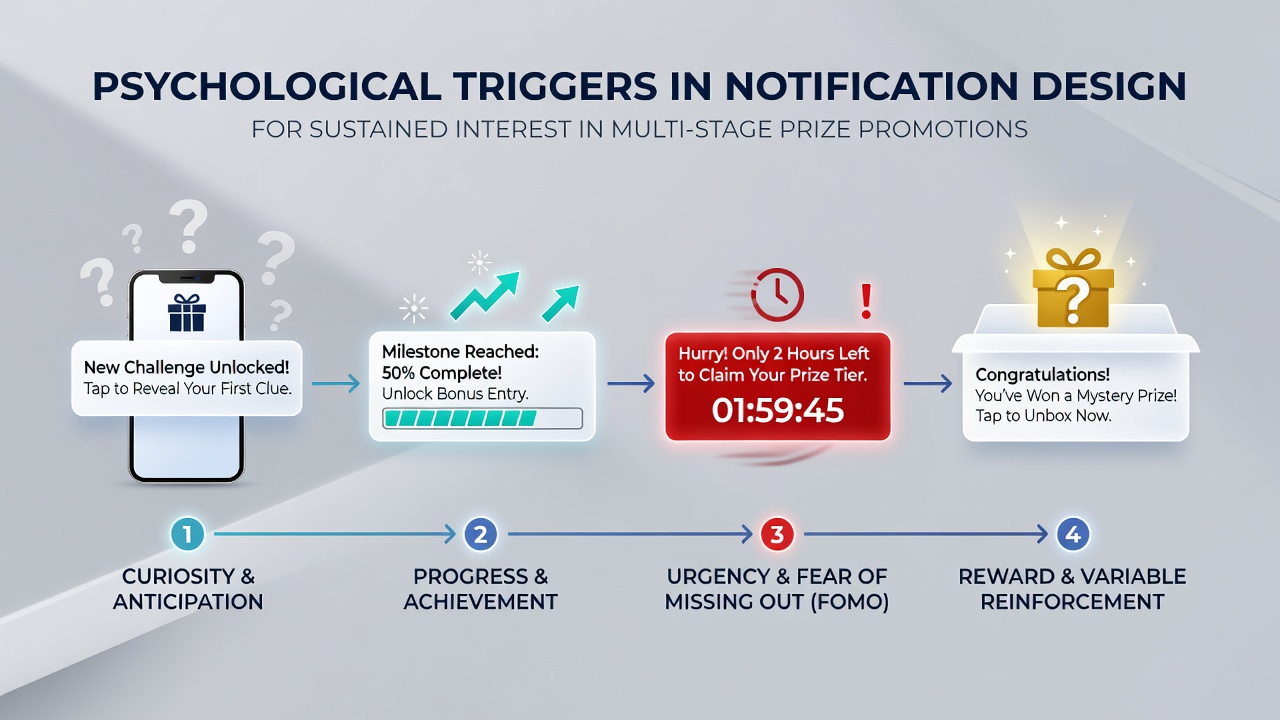
Multi-stage prize promotions rely on carefully timed notifications that activate specific psychological mechanisms to maintain participant engagement across qualification rounds, advancement phases, and final selections. Observers note that these systems draw on principles documented in behavioral research where elements like anticipation, progress visibility, and intermittent reinforcement shape continued interaction without requiring constant user initiative.
Designers incorporate scarcity cues when they highlight limited spots in subsequent stages or countdown timers for entry windows, and data from platform analytics in early 2026 showed higher return rates among users who received such messages compared with those who did not. Researchers at the University of Chicago Booth School of Business have examined similar patterns in reward-based systems, finding that scarcity framing increases perceived value of remaining opportunities while participants move through sequential stages.
Variable Reward Timing and Dopamine Response Patterns
Notifications that deliver updates at irregular intervals rather than fixed schedules activate reward pathways associated with uncertainty, and studies tracking user behavior across recurring promotions indicate that variable timing correlates with longer session durations. One analysis of entry completion rates during spring campaigns revealed that participants who received staggered alerts about stage advancements checked their accounts more frequently than those on predictable schedules. This approach mirrors mechanisms observed in other engagement platforms where unpredictable positive signals encourage repeated checking without explicit instruction.
Progress indicators embedded in messages further reinforce commitment by displaying completed milestones alongside remaining requirements, and industry reports from the Canadian Marketing Association document elevated retention when these visual cues appear in both email and push formats. Participants often respond to partial progress displays because they activate the goal-gradient effect, a phenomenon where proximity to completion motivates additional effort even when absolute rewards remain distant.
Social Proof Elements in Multi-Stage Alerts
Messages that reference peer activity, such as the number of entrants advancing from the same qualification pool or regional leader counts, introduce social proof that influences individual persistence. Figures released by the Australian Competition and Consumer Commission in mid-2026 highlighted how comparative statistics within notifications affected submission patterns during national campaigns, with higher engagement observed when participants saw aggregated peer data rather than isolated personal metrics.
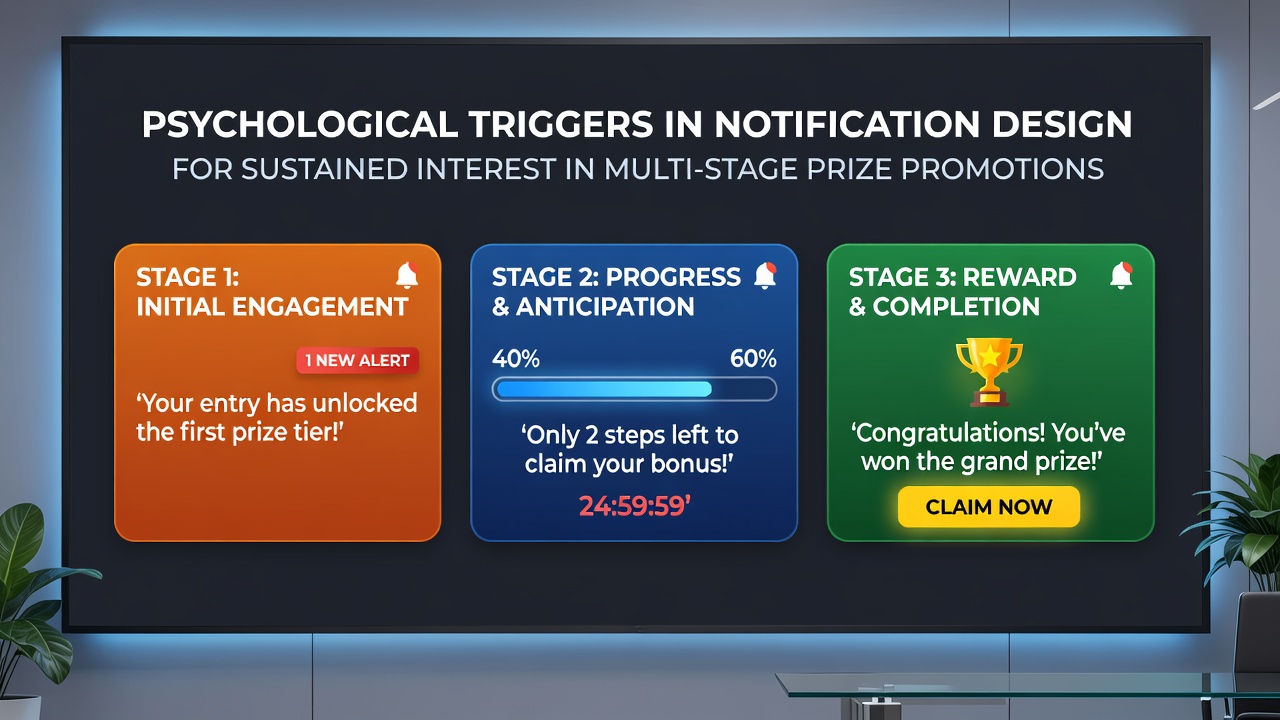
Reciprocity triggers appear when notifications offer small interim benefits, such as bonus entries for continued participation or early access previews, and these gestures prompt users to reciprocate through sustained involvement. Behavioral tracking from several North American platforms demonstrates that recipients of such offers complete later-stage actions at measurably higher rates than control groups who received only standard updates.
Personalization and Cognitive Load Reduction
Targeted notifications that reference a user's specific stage position or historical entry patterns reduce cognitive effort required to decide on next actions, and platform data collected through June 2026 indicates improved continuity when messages avoid generic phrasing. Designers achieve this by integrating eligibility status directly into alert text, allowing participants to process advancement opportunities without navigating separate dashboards. Research published in the Journal of Consumer Research supports the observation that lowered decision friction correlates with higher follow-through across sequential promotional stages.
Loss aversion messaging, which emphasizes what participants might forfeit by disengaging, appears selectively in final rounds and produces distinct response curves compared with gain-focused language used earlier. Analysts tracking these variations across international campaigns note that regional regulatory guidelines influence the frequency and wording of such alerts, with some jurisdictions requiring explicit disclosure of odds alongside any implied risk language.
Conclusion
Notification systems in multi-stage prize promotions function through coordinated application of established psychological principles including scarcity, variable reinforcement, social comparison, and reciprocity, and available platform metrics along with academic examinations confirm measurable impacts on sustained user activity. Continued refinement of these designs depends on ongoing measurement of response patterns across different demographic segments and regulatory environments, ensuring that triggers remain effective while complying with disclosure requirements in each market.