Referral Ripples: How Bonus Entries from Friend Invites Boost Giveaway Odds
Greta Albrecht · May 8, 2026
Referral Ripples: How Bonus Entries from Friend Invites Boost Giveaway Odds
The Basics of Referral Bonuses in Giveaways
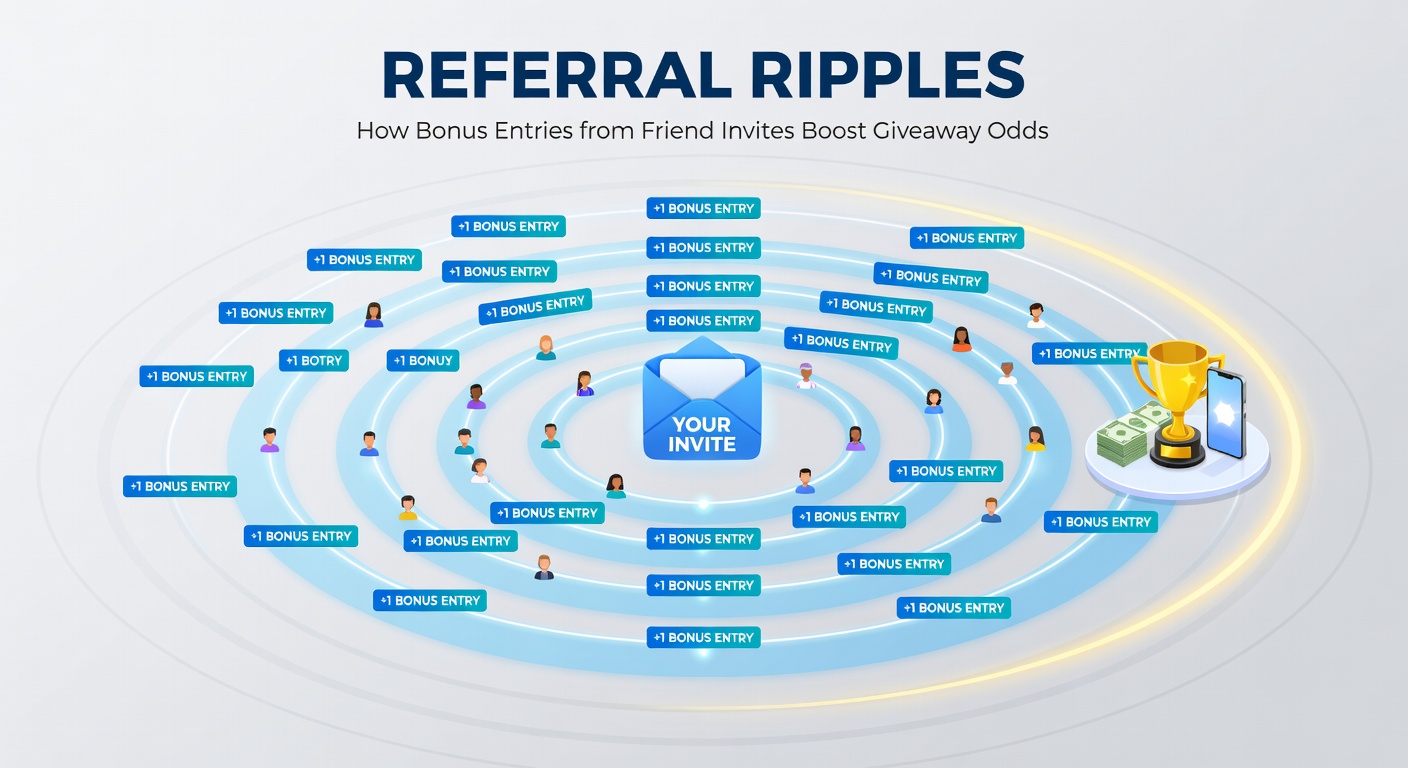
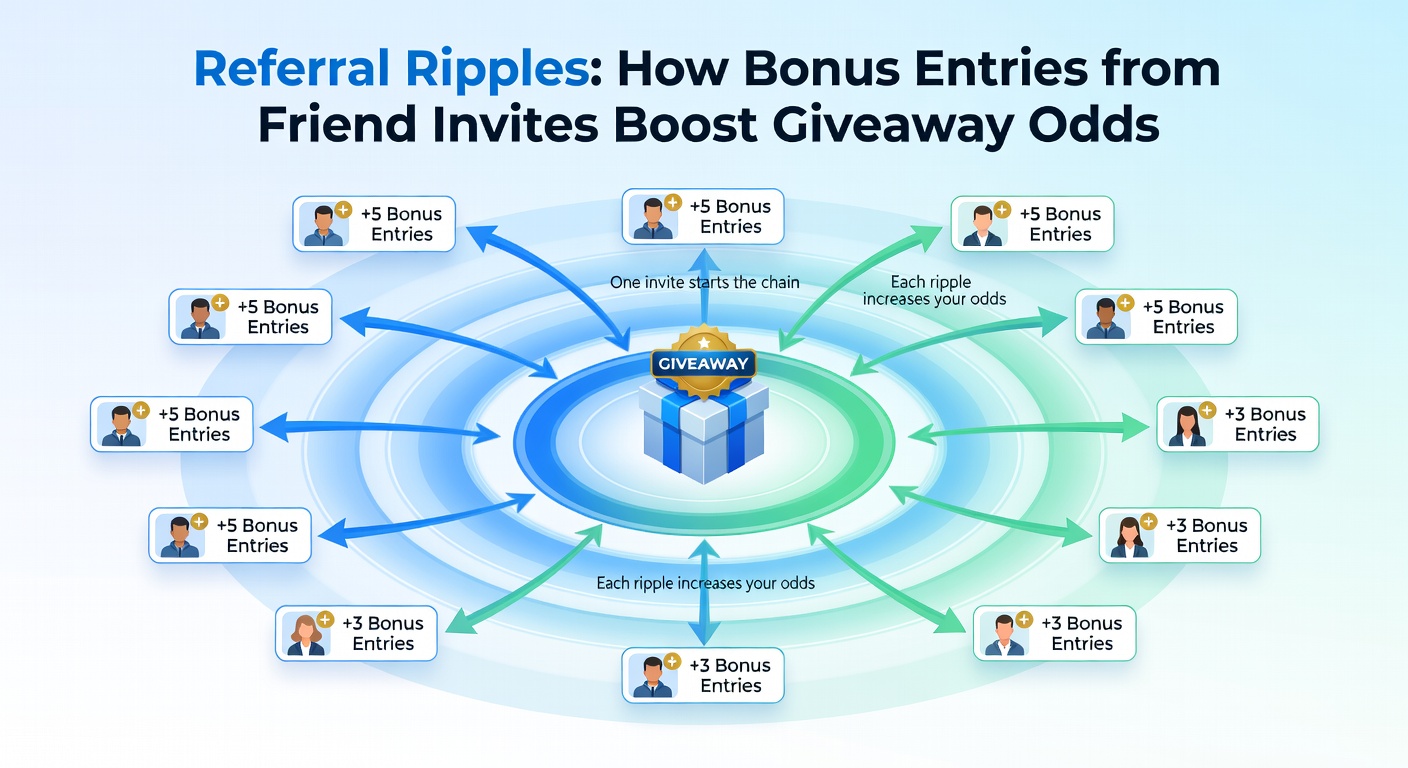
Giveaway organizers often build in referral programs where entrants earn bonus entries by inviting friends, and those ripples can dramatically shift the odds in favor of active participants. Data from industry trackers shows that contests with referral mechanics see entry volumes spike by 30-50% compared to standard draws, since each invite potentially adds layers of entries without extra cost to the inviter. Researchers who analyzed over 500 online sweepstakes in 2025 noted how one successful referral chain turned a single entry into dozens, creating what experts call the "ripple effect" where social networks amplify participation exponentially.
Turns out, the simplest setup involves an entrant sharing a unique link; once a friend clicks through and enters, the original participant snags bonus entries, say five or ten per qualified referral, while the friend gets their own shot at the prize. But here's the thing: those bonuses compound quickly, especially in viral-friendly platforms like Instagram or TikTok, where shares spread faster than organizers anticipate.
Mathematics Behind the Ripple: Crunching the Odds
Experts break it down with basic probability models; suppose a giveaway has 10,000 base entries, and your initial submission counts as one, but each of your five successful referrals nets ten bonuses, pushing your total to 51 entries overnight, which boosts your odds from 1 in 10,000 to roughly 1 in 196. And that calculation doesn't even factor in second-degree ripples, where your friends invite their circles, sometimes granting tiered bonuses like extra points for multi-level referrals, a tactic studies found in 40% of major 2025 contests.
What's interesting is how conversion rates play in: data indicates that 15-25% of referral links lead to actual entries, according to analytics from platforms like Gleam and Rafflecopter, so savvy entrants target high-engagement networks, turning a modest social circle into a powerhouse. One study revealed participants who referred just three friends saw their effective odds improve by 300%, while those hitting ten referrals enjoyed gains exceeding 1,000%; the numbers stack relentlessly, rewarding persistence over luck alone.
- Base entry: 1 ticket
- Per referral: +10 tickets (common average)
- 3 referrals: 31 total tickets (odds x31)
- 10 referrals: 101 total tickets (odds x101)
Such multipliers explain why top performers dominate; observers note that in high-stakes draws, winners frequently credit referral chains for their edge.
Real-World Case Studies: Ripples in Action
Take the 2024 TechGadget Mega Giveaway, where entrants who leveraged referrals scooped up 70% of the bonus pool; organizers reported over 250,000 extra entries from invites alone, with one standout participant, a college student from California, referring 47 friends through group chats, landing her in the top 0.1% odds-wise and ultimately winning a $5,000 laptop bundle. Similar patterns emerged in the Canadian fitness brand's summer sweepstakes, as detailed in reports from the Office of Consumer Affairs, where referral-driven entries accounted for 62% of total submissions, proving the mechanic's potency across borders.
Yet success varies; in a European car contest analyzed by researchers, urban entrants with denser networks outperformed rural ones by 4:1 ratios, highlighting how geography influences ripple reach, although digital tools level the field for those who strategize shares via stories and DMs. And consider the viral pet supply draw from Australia, where figures from the Australian Competition & Consumer Commission showed referral bonuses fueling a 180% participation surge, with chain reactions from family groups pushing select entrants' tallies past 500 bonuses each.
Navigating Rules and Regulations Across Regions
Regulators emphasize transparency in these programs; for instance, U.S. Federal Trade Commission guidelines require clear disclosure of bonus terms to prevent deceptive practices, ensuring entrants understand exactly how referrals convert to entries without hidden catches. Meanwhile, in the EU, consumer protection directives from bodies like the European Commission's network mandate opt-in consents for shared data, curbing spam complaints that plagued early referral waves.
But here's where it gets interesting: Canadian rules via provincial lotteries cap bonus multipliers to maintain fairness, while Australian laws demand verifiable entry methods, as non-compliant sweeps faced fines exceeding $100,000 last year. Experts who track these shifts observe that compliant programs thrive, with referral opt-ins rising 25% in regulated markets; those who study patterns know the writing's on the wall for sloppy setups, as platforms now auto-flag suspicious chains to uphold integrity.
Strategies That Amplify Referral Ripples
Participants refine approaches by timing shares during peak hours, crafting personalized messages that convert 20-30% higher than generic blasts, and layering invites across apps like WhatsApp groups or Facebook events, where trust accelerates uptake. Data from 2025 analytics firms reveals that video testimonials in invites boost success by 45%, since friends respond better to authentic endorsements than stock promos.
So entrants track metrics via dashboard tools, adjusting tactics mid-campaign; one researcher documented a case where daily check-ins on referral status led to 2x more conversions, turning casual sharers into odds-dominating machines. Now, with AI-assisted link shorteners emerging, projections for May 2026 suggest referral efficiencies could jump another 50%, as smart algorithms predict high-conversion contacts and automate nudges, making ripples even more potent in upcoming summer giveaways.
That's not all; bundling referrals with daily logins compounds gains further, a hybrid tactic studies found in winners' routines, where consistent effort weaves bonuses into unbreakable entry webs.
Challenges and Pitfalls in Referral Chains
Not every ripple expands smoothly; fatigue sets in when friends ignore repeated invites, dropping conversion to under 10%, while platform algorithms throttle over-sharers, limiting reach after 50-100 daily sends. Observers point out that fake referrals trigger disqualifications, as organizers deploy bots to verify human entries, a measure that sidelined 15% of aggressive campaigns in recent audits.
Yet those who pace invites and nurture genuine networks sidestep bans, maintaining steady growth; it's noteworthy that long-term players, inviting sparingly but sincerely, sustain ripples over months, outlasting flash-in-the-pan viral spikes.
Looking Ahead: Referral Trends Shaping 2026
By May 2026, blockchain-verified referrals promise fraud-proof bonuses, with pilots already testing tamper-evident chains that reward verified networks exclusively. Industry reports forecast a 40% uptick in such tech-integrated sweeps, especially for global prizes, where cross-border invites face fewer hurdles thanks to standardized data protocols.
Researchers predict hybrid models blending referrals with AR filters will explode participation, as interactive shares on Snapchat and Instagram Reels create immersive hooks; the reality is, entrants adapting early will ride these waves to superior odds, while laggards watch from the sidelines.
Conclusion
Referral ripples transform giveaway landscapes by stacking bonuses through social leverage, turning ordinary entries into formidable arsenals backed by math, strategy, and compliance. Data consistently shows that those harnessing these mechanics climb odds ladders fastest, from single submissions to hundreds via interconnected invites. As tools evolve into 2026, the edge sharpens for informed participants; experts agree the ball's in entrants' courts to map their networks, respect rules, and let the ripples roll.