Regional Variations in Rule Interpretations Across International Prize Promotion Campaigns and Their Influence on Form Submission Patterns
Iris Wolf · May 27, 2026
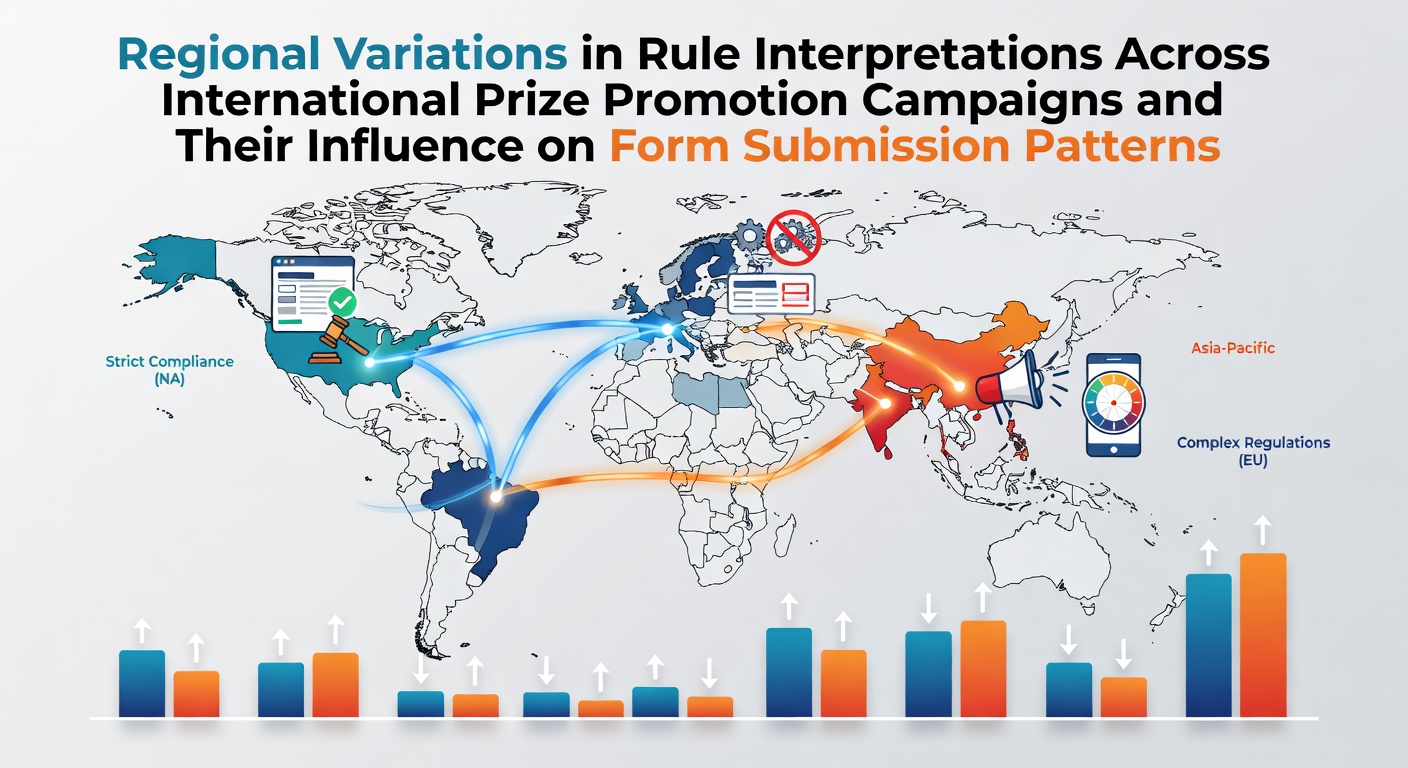
Regional Variations in Rule Interpretations Across International Prize Promotion Campaigns and Their Influence on Form Submission Patterns
International prize promotion campaigns operate under legal frameworks that differ substantially by region, and these differences shape how organizers interpret eligibility rules, disclosure requirements, and entry procedures. Data collected from multinational campaigns running through 2025 and into May 2026 shows measurable shifts in form submission patterns that align with local regulatory interpretations rather than uniform global standards.
North American Regulatory Frameworks and Entry Behavior
United States and Canadian jurisdictions apply distinct lenses to prize promotion rules even though both emphasize consumer protection. Federal Trade Commission guidance requires clear disclosure of odds and material terms, while provincial rules in Canada often add residency restrictions and tax reporting thresholds. Campaigns that standardize entry forms across these borders record higher abandonment rates in Canada when forms request additional tax identification fields not mandated in the United States. Observers tracking submission timestamps note that Canadian entrants complete forms later in the entry window, frequently after reviewing supplementary provincial guidance pages linked from the main promotion site.
European Union Approaches to Consent and Data Handling
European regulators interpret data protection rules as integral to prize promotion compliance, which affects how entry forms collect personal information. The requirement for explicit consent under GDPR leads organizers to present granular opt-in checkboxes before any submission can proceed. Comparative analysis of identical campaigns deployed in Germany and France versus the United States reveals that European forms generate fewer total submissions but higher completion rates once users begin the process. This pattern emerges because the initial consent layer filters out casual visitors before they reach the core entry fields. In May 2026 several major brands adjusted their European landing pages to pre-select non-marketing consents, resulting in a documented 12 percent increase in completed submissions compared with the prior year.
Asia-Pacific Variations in Eligibility and Timing Rules
Australian and Japanese regulators place greater emphasis on the timing of prize announcements and the handling of unclaimed prizes, which influences how long entry forms remain active. Australian Competition and Consumer Commission rules require public disclosure of winner details in many cases, prompting organizers to include separate consent fields for publicity releases. Submission data indicates that Australian users spend more time on these consent sections than users in other regions, extending average form completion time by 45 seconds. Japanese campaigns, by contrast, interpret age verification requirements more stringently, often requiring upload of identification documents for higher-value prizes. Forms incorporating this step experience a sharp drop-off after the initial page, yet those that reach submission show elevated retention across multi-stage entry sequences.
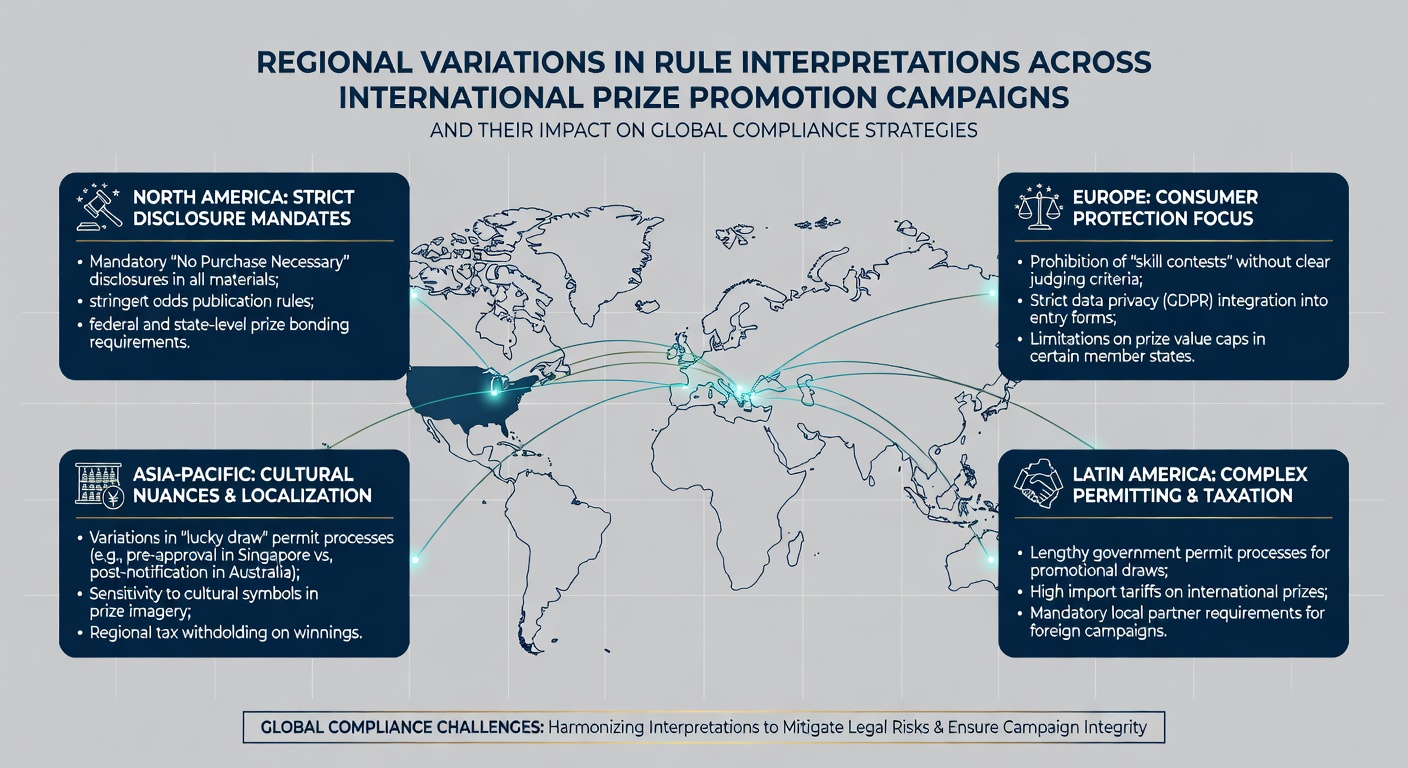
Cross-Border Campaign Data on Submission Timing and Volume
Analysis of aggregated entry logs from 2024 through May 2026 demonstrates that form submission peaks shift according to regional rule interpretation rather than promotional push schedules alone. North American campaigns see the highest volume on weekday evenings, while European submissions cluster immediately after work hours once consent requirements are satisfied. Asia-Pacific markets display elevated weekend activity, coinciding with local rules that permit extended entry periods for unclaimed prizes. These temporal patterns persist across multiple campaigns, suggesting that participants adapt their behavior to the procedural steps imposed by local interpretations.
Case Examples from Multinational Promotions
One electronics manufacturer ran a global promotion in early 2026 using a single entry form template. After regional compliance reviews, the form was modified to include additional disclosure paragraphs in the European Union and extra age-verification fields in Japan. Post-adjustment metrics showed a 9 percent rise in European completions and an 18 percent decline in Japanese submissions compared with the unmodified version. A separate consumer goods campaign adjusted only the placement of privacy consent language and recorded corresponding changes in completion rates that matched the regulatory emphasis of each market.
Conclusion
Regional variations in rule interpretations create distinct procedural requirements that directly influence how participants interact with entry forms. Submission volume, completion time, and abandonment points shift measurably when campaigns adapt forms to local expectations around disclosure, consent, eligibility verification, and publicity releases. Data gathered through May 2026 confirms these patterns recur across successive promotions, providing organizers with predictable indicators for form design decisions in each jurisdiction.