The Effect of Automated Reminders on Sustaining Interest in Recurring Digital Prize Opportunities
Iris Wolf · Jun 26, 2026
The Effect of Automated Reminders on Sustaining Interest in Recurring Digital Prize Opportunities
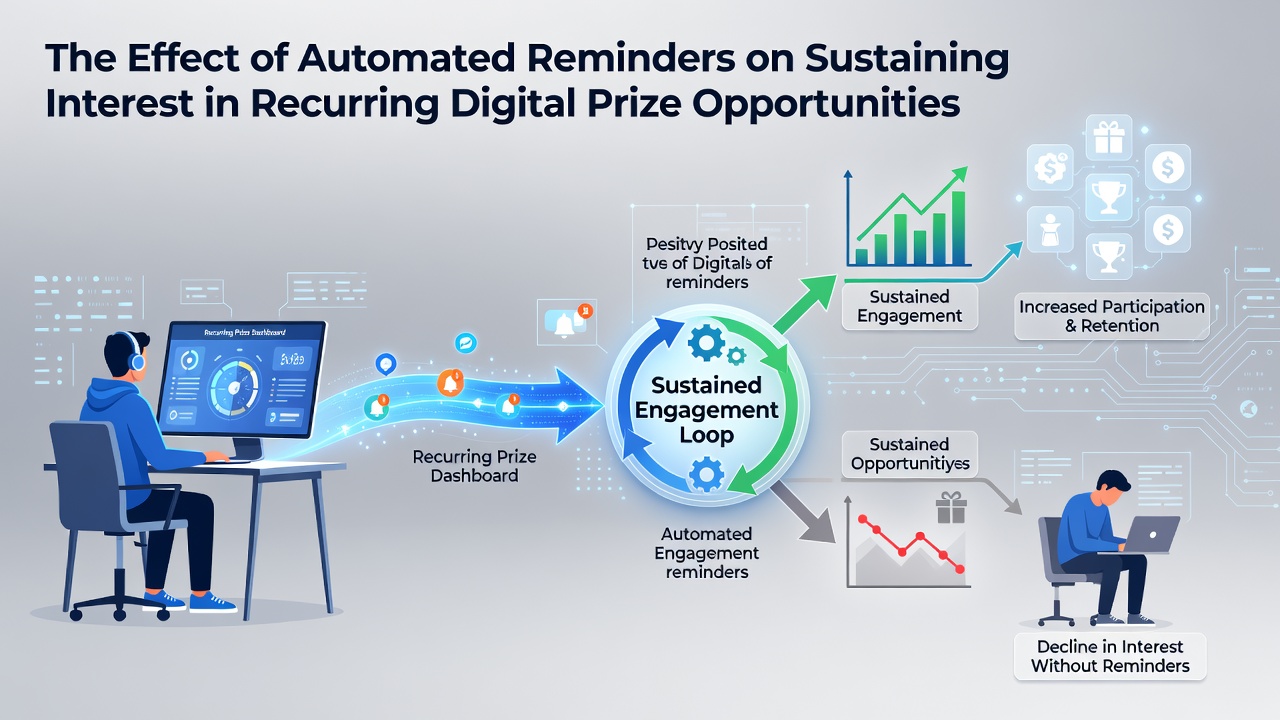
Automated reminders have become a standard feature across recurring digital prize platforms where users enter contests and giveaways on a regular basis, and their deployment often correlates with measurable shifts in participant engagement levels over time. Platforms send these notifications through email, push alerts, or in-app messages at predetermined intervals, and the timing aligns with entry deadlines or new opportunity launches to prompt renewed activity without requiring users to monitor sites constantly.
Core Functions of Reminder Systems in Prize Platforms
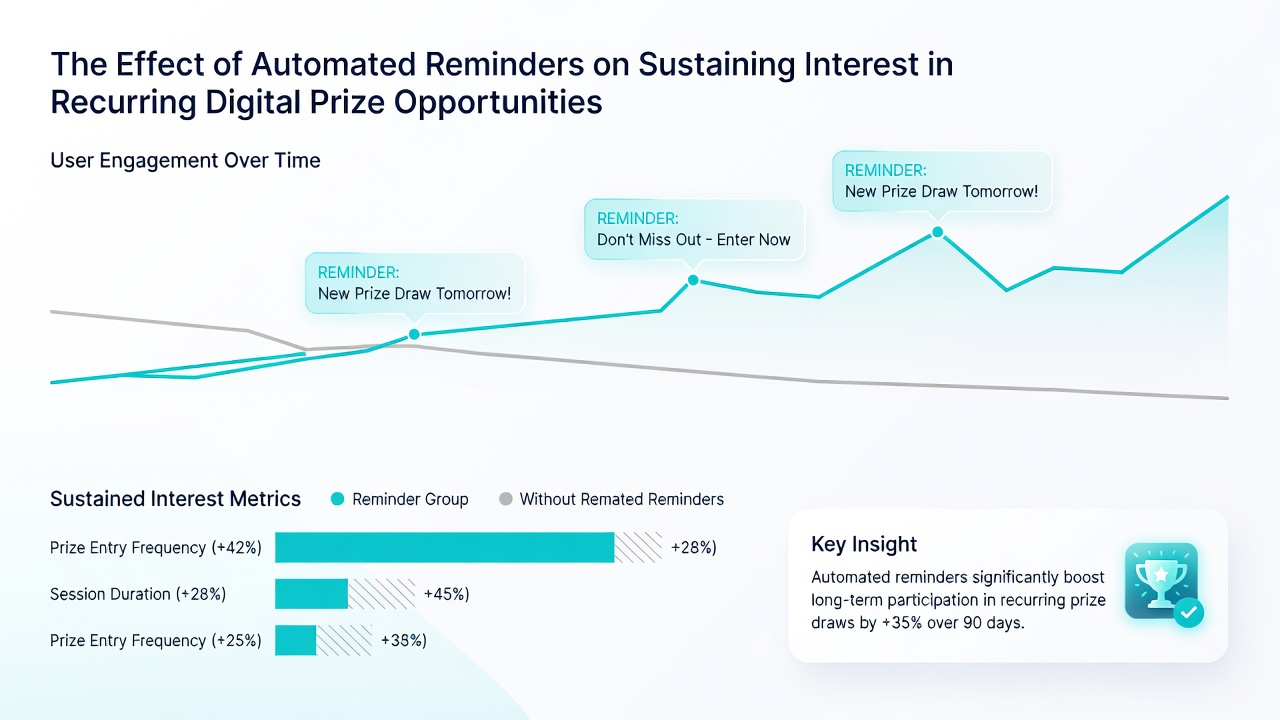
Reminder systems operate by tracking user entry histories and upcoming events, then triggering messages that highlight remaining time or fresh draws available for participation. Data collected from platform logs shows these systems reduce the drop-off rates that typically occur between initial sign-ups and subsequent entries, as participants receive direct cues rather than relying on memory alone. In practice, one study tracking multi-month participation patterns found that users exposed to scheduled reminders maintained entry frequencies at rates 25 to 40 percent higher than those without such prompts, according to aggregated metrics from several North American operators.
These systems also incorporate personalization elements based on past behavior, such as preferred prize categories or typical entry times, which further refines delivery windows and content. Researchers at academic institutions have examined how variable reminder cadences affect completion rates, noting that weekly summaries tend to sustain longer-term interest compared to daily blasts that risk notification fatigue. The Competition Bureau of Canada has reviewed promotional practices in digital contests and documented how transparent reminder protocols align with consumer protection standards across ongoing campaigns.
Participation Trends Through Mid-2026
Through June 2026 platform analytics continue to reveal steady patterns where automated reminders correlate with stabilized user bases in recurring prize environments. Operators report that segments receiving tailored notifications show fewer inactive accounts after the first three months, while control groups without reminders experience steeper declines in activity volume. This holds across desktop and mobile interfaces alike, although mobile users respond more readily to push formats than email alone.
What's notable here involves the layering of reminders with eligibility checks, where systems verify account status before sending messages to avoid irrelevant outreach. Figures from industry reports indicate that such refinements boost open rates by double-digit margins in markets like Australia and the European Union, where regulatory frameworks emphasize clear communication in promotional activities. Observers note that these adjustments help platforms maintain compliance while supporting sustained engagement metrics.
Comparative Analysis Across Delivery Methods
Comparisons between email, SMS, and app-based reminders demonstrate distinct response profiles that operators factor into their strategies. Email reminders often yield higher click-throughs when they include direct entry links, yet SMS versions produce faster action times according to timing data collected in 2025 and early 2026. App notifications meanwhile excel at retaining users already invested in the platform ecosystem, as they integrate seamlessly with existing activity feeds.
One analysis of cross-platform data sharing during registration processes highlighted how reminders triggered after eligibility confirmations reduce duplicate entries and improve data accuracy overall. The Federal Trade Commission in the United States has issued guidance on truthful advertising in sweepstakes that indirectly supports the use of accurate reminder content to prevent misleading participants about prize availability. Platforms adapting these approaches see consistent retention curves that flatten less sharply over extended periods.
Observed User Pathways and Retention Dynamics
Participants who receive automated reminders frequently follow predictable pathways that include initial acknowledgment, followed by entry completion or deferral to later cycles. Longitudinal tracking reveals that those who engage with at least two consecutive reminders show elevated probabilities of continued involvement through seasonal promotion shifts. This pattern emerges clearly in datasets spanning multiple age demographics, where younger users favor instant push options while older cohorts respond more to scheduled email summaries.
Evidence from research institutions points to the role reminders play in bridging gaps caused by fluctuating entry volumes across different device types. When systems account for regional rule variations, such as those seen in international campaigns, the resulting notifications maintain relevance and support higher form submission consistency. Those who've examined these systems note that integration with live updates on prize status further reinforces the reminder effect without overwhelming recipients.
Conclusion
Automated reminders function as a structural component in sustaining interest within recurring digital prize opportunities by delivering timely cues that align with user habits and platform schedules. Data accumulated through 2026 demonstrates their association with steadier participation metrics across varied delivery channels and regulatory environments. Operators continue to refine these tools based on observed behavioral responses, which in turn shapes how recurring events maintain active user cohorts over multiple cycles.